

System
Teaching
The NTIP is the second job-embedded step along a continuum of professional learning for new teachers, building on and complementing initial teacher education programs. It provides professional support to help new teachers develop the requiste skills and knowledge to be effective teachers in Ontario.
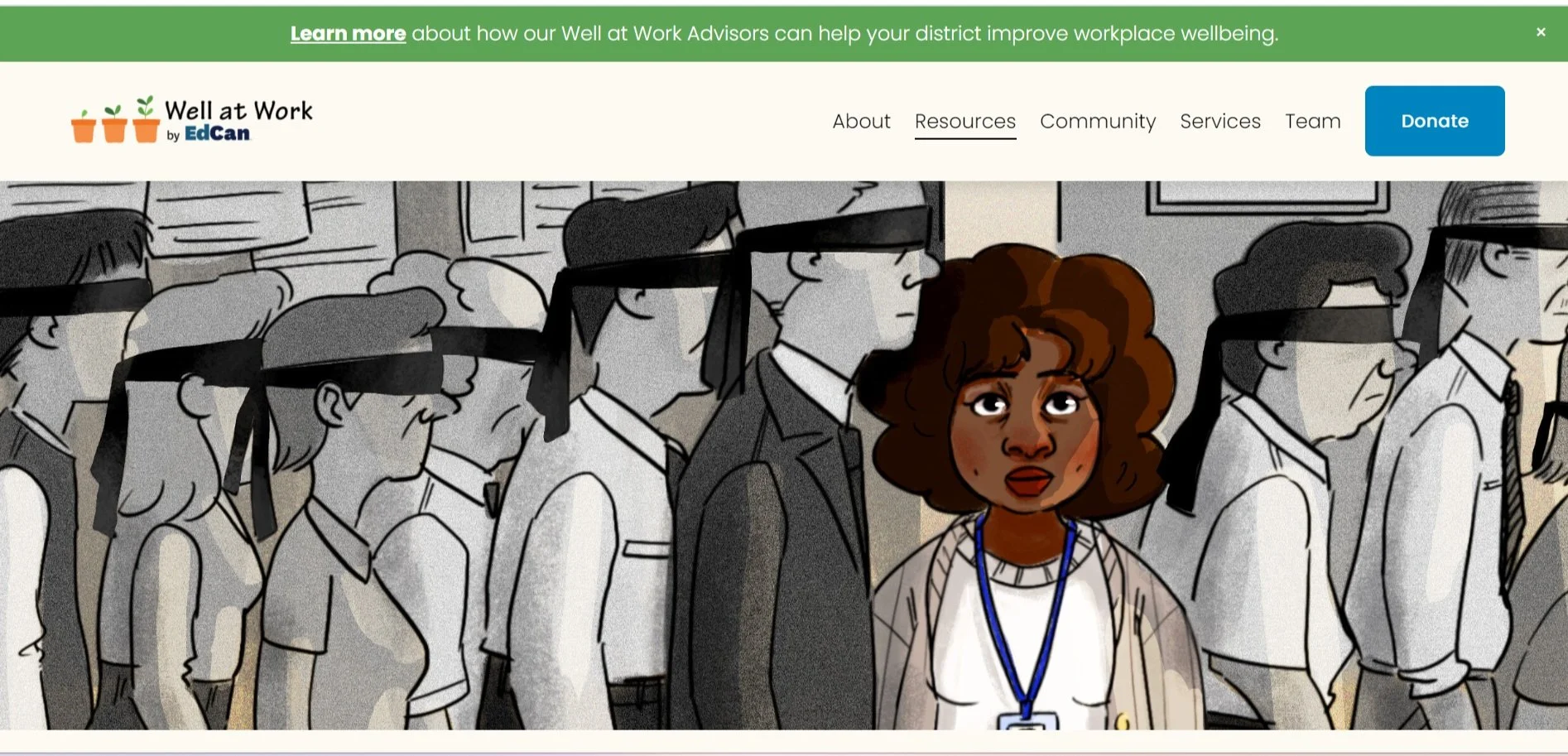
An effective anti-racism programs from school districts should feature an acknowledgement, community partnership and leadership, accountability, disaggreagated race-based data collection, transparent monitoring and reporting and policy development and implementation.

The four-day school week has received mixed reviews in the literature (“A shortened workweek is not a ‘magic pill’ to solve the problem. If we don’t improve working conditions and compensate educators properly, the length of the workweek will not matter”)

Principals could apply for a 10 week paid leave to undertake professional learning, reflection and rejuvenation. The purpose is to improve overall retention rates of experienced, effective principals and enhance their enthusiasm for school leadership.
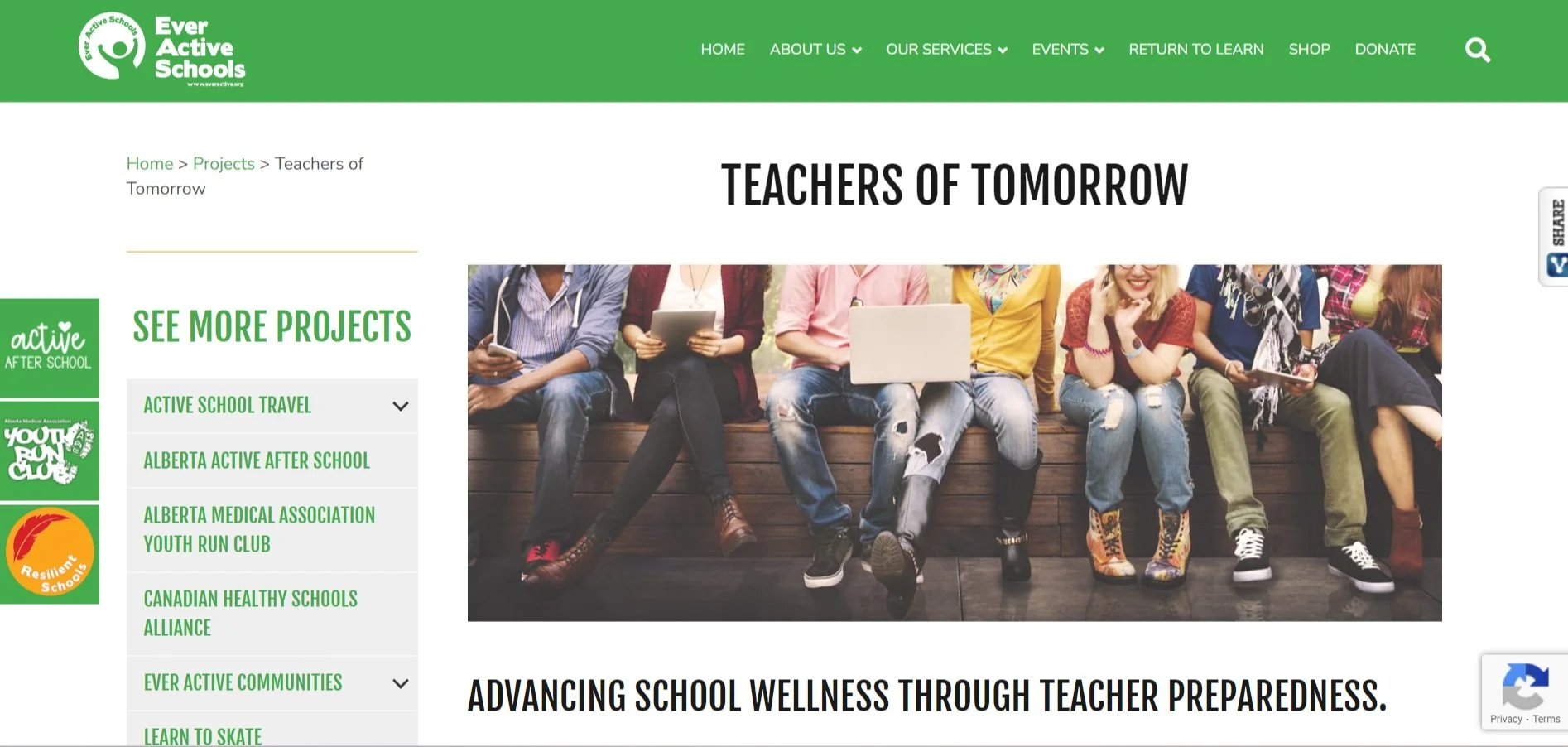
Teachers of Tomorrow Project (AB) (BC)
This iniative proposes an upstream approach to addressing student well-being though the issue of teacher preparedness. The results of this work has been a prototype for a system of wellness education, modelled on the CSH framework and involving the development of key partnerships, addressing the social and physical environments of the faculty, implementing healthy school policies and teacher and learning strategies. Knowledge exchange can be found at cshhub.com.
Establish a pan-Canadian network focusing on mental health and wellbeing in K-12 education (Recommended Actions and Next Steps pp. 18- 27).
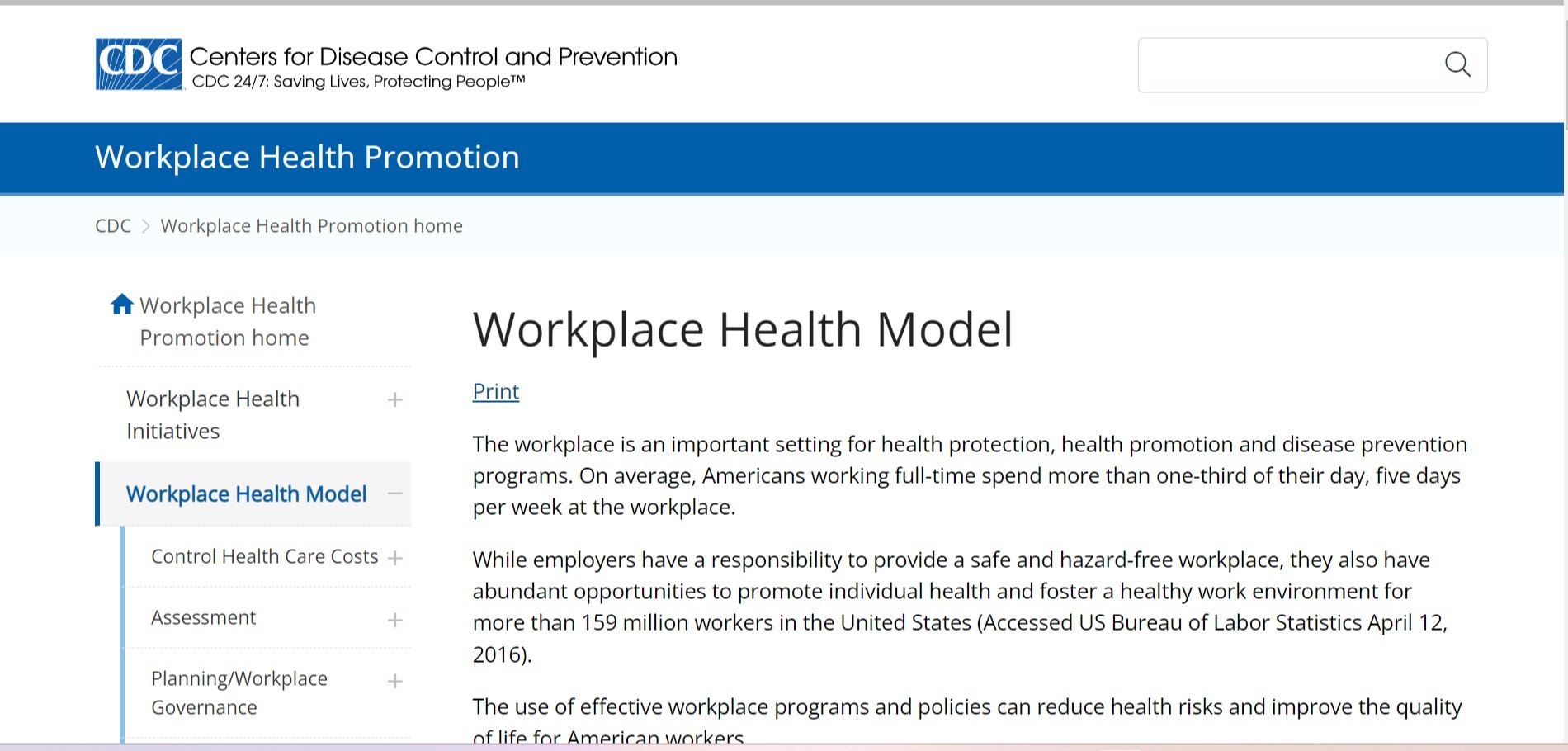
Workplace health programs refer to a coordinated and comprehensive set of strategies which include programs, policies, benefits, environmental supports, and links to the surrounding community designed to meet the health and safety needs of all employees.
Guarding Minds is a free online set of resources designed to assess and address psychological health and safety in your workplace. It is intended to be administered by one of your own employees.
“Every school board should have someone supporting teacher wellness piece, so part of their portfolio is to ensure teacher wellness ”
Dentistry
The Dentist Wellness Program provides confidential support for BC dentists and their families through experienced program staff and/or an extensive network of counsellors, therapists and coaches. The program helps with a wide range of issues, including substance use, mental health, relationship stress, etc.
The ODA provides assistance to dentists, their dependents and dental students who are in need of assistance because of illness, bereavement, an accident or other unexpected situation or misfortune.
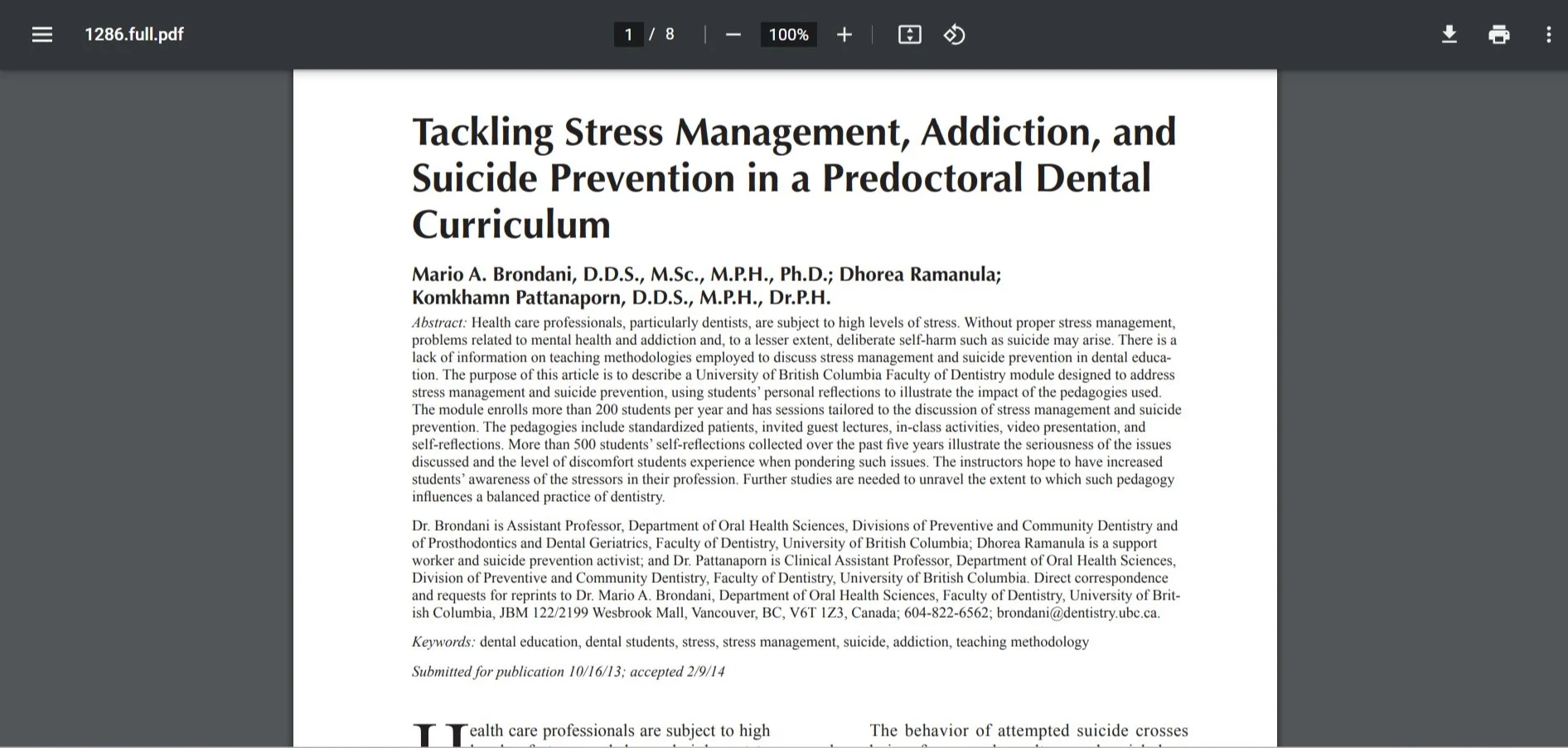
A University of British Columbia Faculty of Dentistry module designed to address stress management and suicide prevention. The pedagogies include standardized patients, invited guest lectures, in-class activities, video presentation, and self-reflections.

This document, developed by the Government of Alberta, includes information for employers about control strategies for commonly occurring psychological hazards, including ways to reduce the impact of increased workloads (e.g., allow workers to say “no” to overtime without repercussions) (p. 48).
In this video, Dr. Sheila Raja discusses the burnout in healthcare (including associated concepts such as compassion fatigue and vicarious traumatization) and strategies to avoid it.
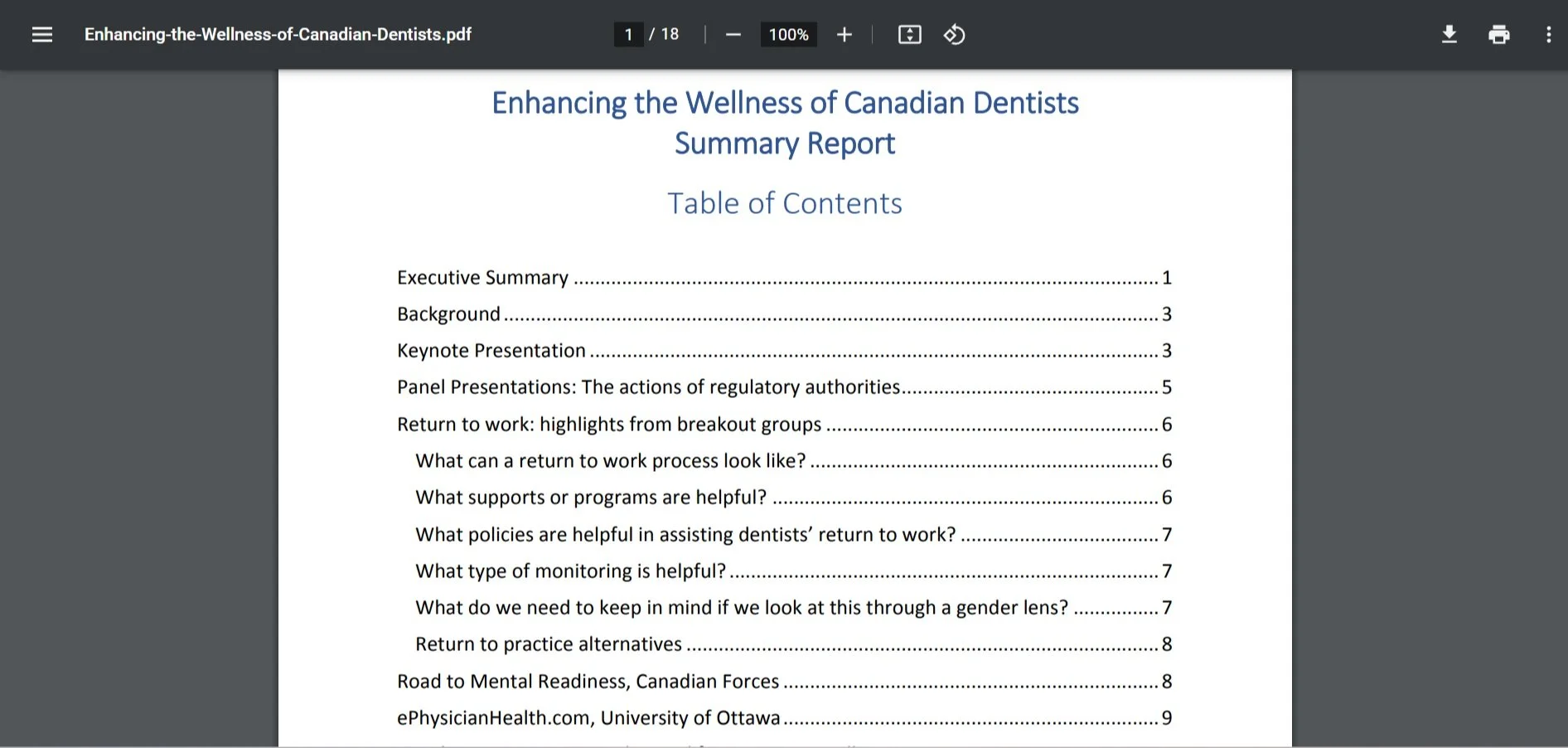
Dentists who must withdraw from practice to undergo treatment for mental health or addiction reasons face the challenge of keeping their practice viable in their absence and covering costs associated with treatment and income loss. B.C. dentists, for example, are supported in these challenges through the BCDA (locum placements).(p.1)
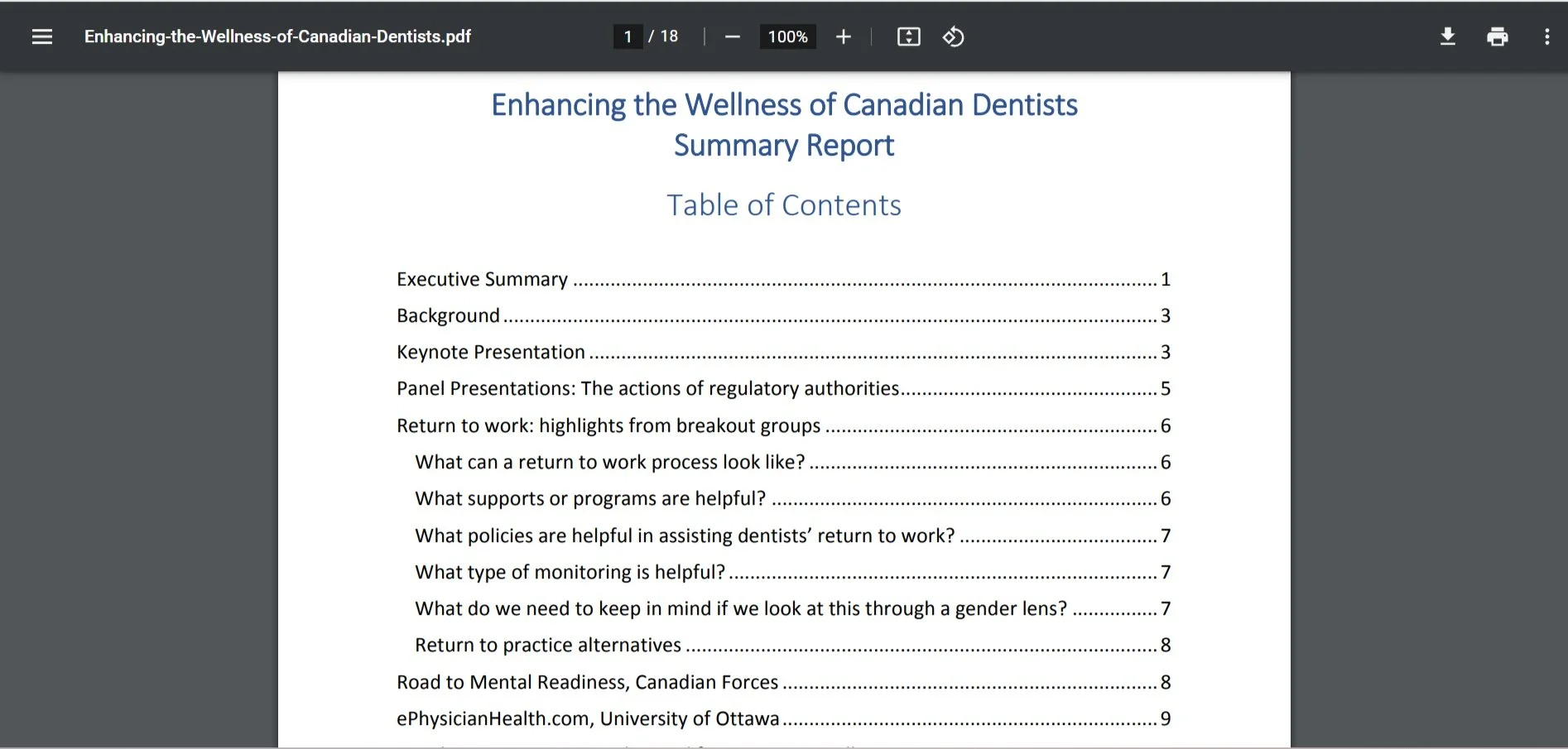
A policy is needed to address and protect the future insurability of the practitioner for short- or long-term disability once they have undergone rehabilitation for an addiction or mental health problem (p.7).
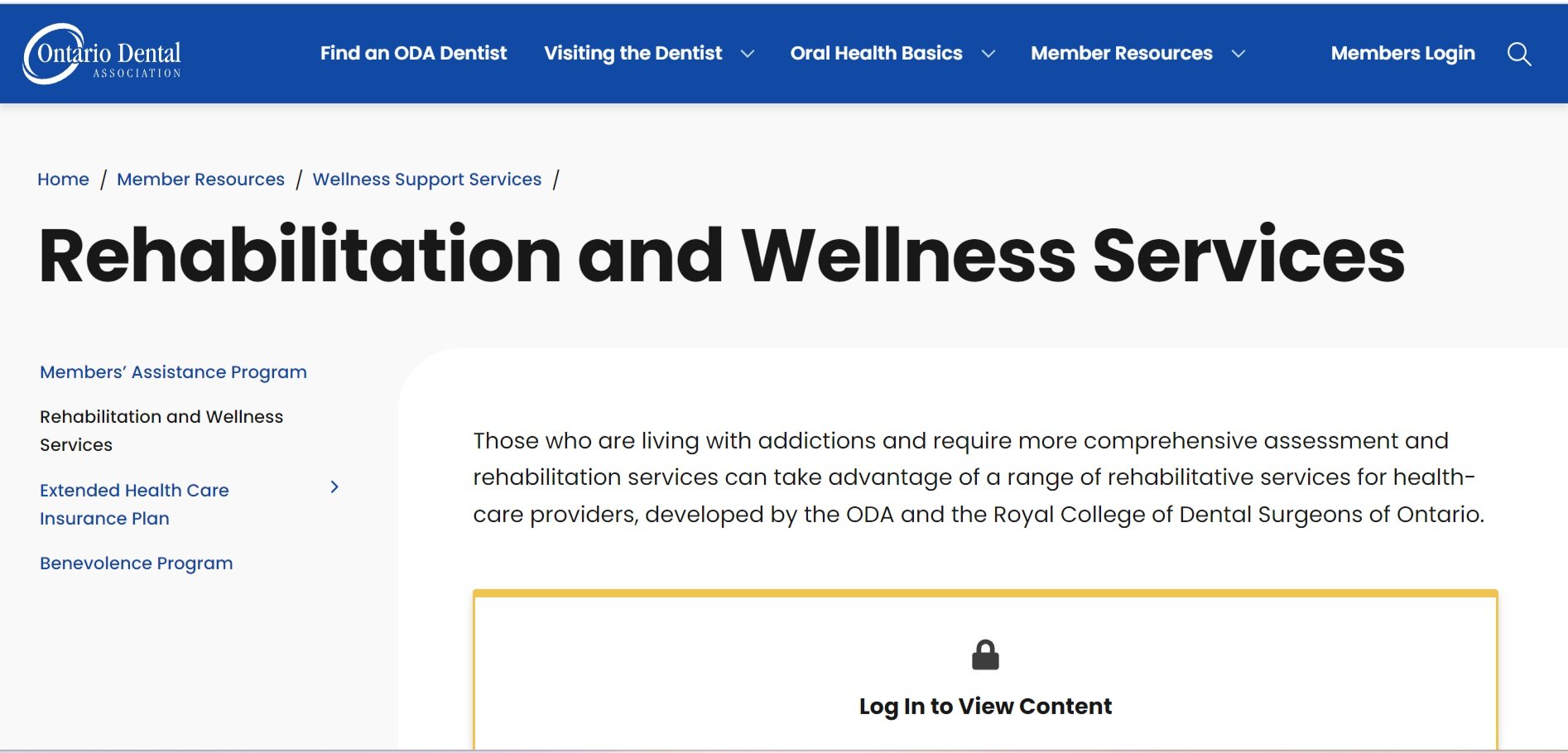
Dentists living with addictions can take advantage of a range of rehabilitative services for health-care providers, developed by the ODA and the Royal College of Dental Surgeons of Ontario.
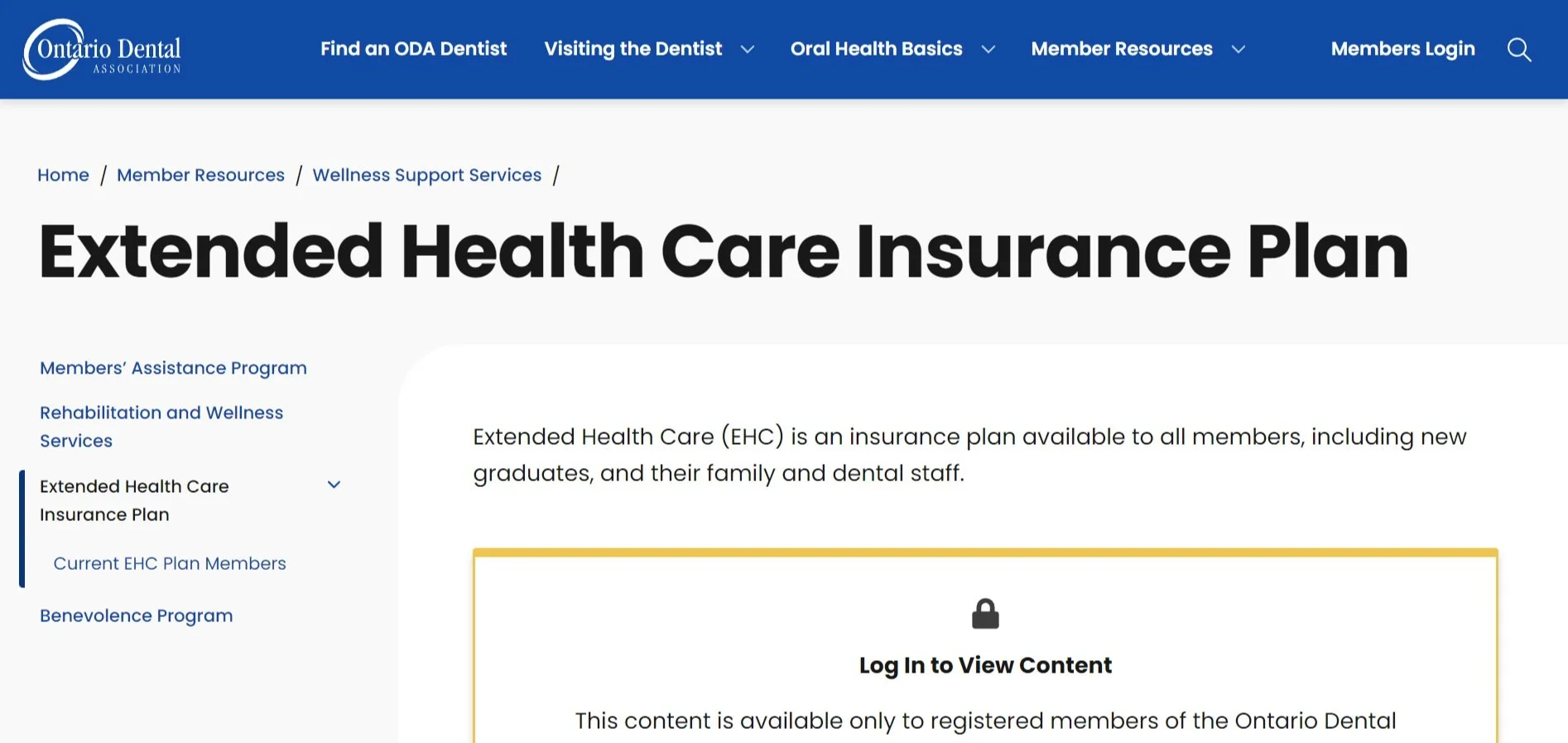
This plan is an insurance plan available to all ODA members, including new graduates, and their family and dental staff.

Sponsored by CDSPI and available to dentists, dental office staff, dental students and employees of the Canadian Dental Association and their immediate family members, MAP provides access to professional guidance, clinical counselling and wide variety of wellness resources to help at school, work and in personal life.
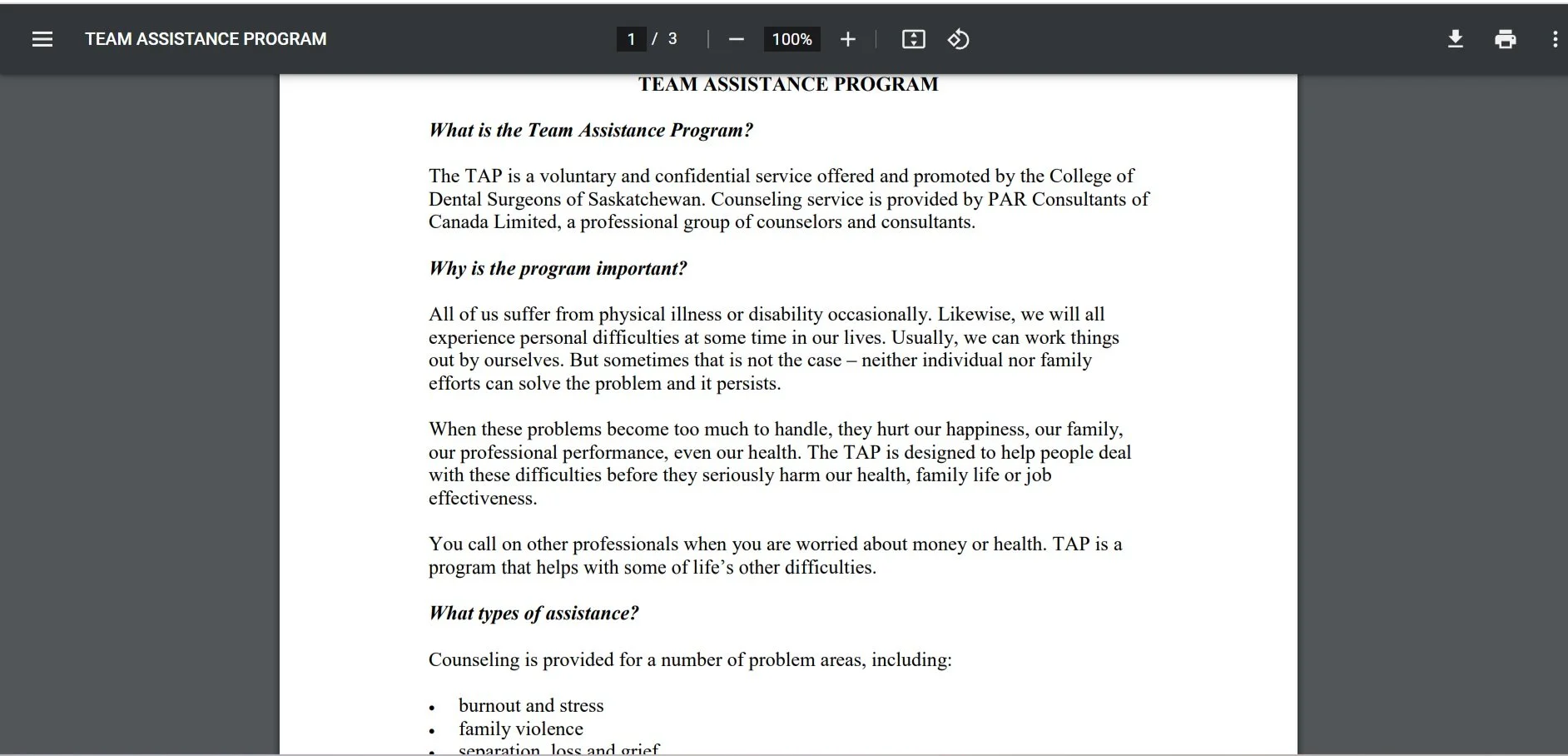
The TAP is a voluntary and confidential service offered and promoted by the College of Dental Surgeons of Saskatchewan. Counseling service is provided by PAR Consultants of Canada Limited, a professional group of counselors and consultants.
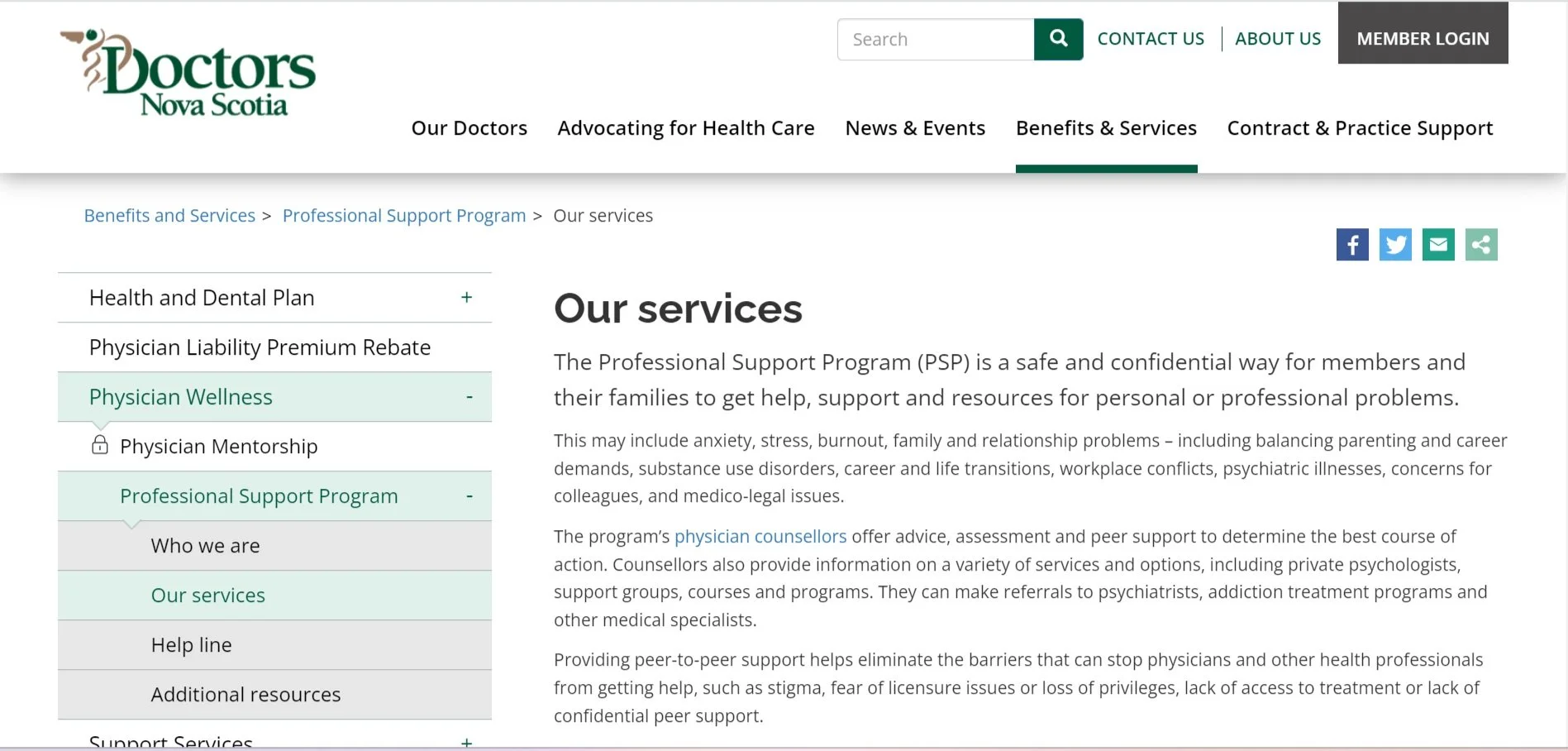
Doctors Nova Scotia’s Professional Support Program (PSP) provides confidential peer-to-peer support for members and their families who are dealing with personal or professional problems and also supports initiatives, workshops and other resources that promote wellness, resiliency and balanced living.
CE Courses and Virtual Sessions on Stress and Work-Life Balance at National Dental Conferences
At national conferences (E.g, Pacific Dental Conference), there are CE courses and virtual sessions on work life balance, stress in dentistry and other topics related to dentists’ mental health
CDA Discussions on Mental Health
Through various discissions, Canadian Dental Association raises awareness of mental health issues among dentists and how they should be more open about discussing them. (e.g., Is It Time To Reach Out?), an article on these issues published in CDA Essentials magazine).
PEI Dental Association Wellness Program
The association has an informal wellness program where they have partnered informally with a psychologist to provide help for the Association's members in case they needed help.

“You kind of need those little cohorts of dentists to champion us [Members’ Assistance Program] among their own little communities because offices are very isolated .”
Interviewee