

Dentistry
Legend
Practices without the link that are highlighted in yellow come from our study interview respondents
Resources highlighted in green indicate this is a gender sensitive intervention
Systems (Policies, Programs, and Legislation)
The Dentist Wellness Program provides confidential support for BC dentists and their families through experienced program staff and/or an extensive network of counsellors, therapists and coaches. The program helps with a wide range of issues, including substance use, mental health, relationship stress, etc.
The ODA provides assistance to dentists, their dependents and dental students who are in need of assistance because of illness, bereavement, an accident or other unexpected situation or misfortune.
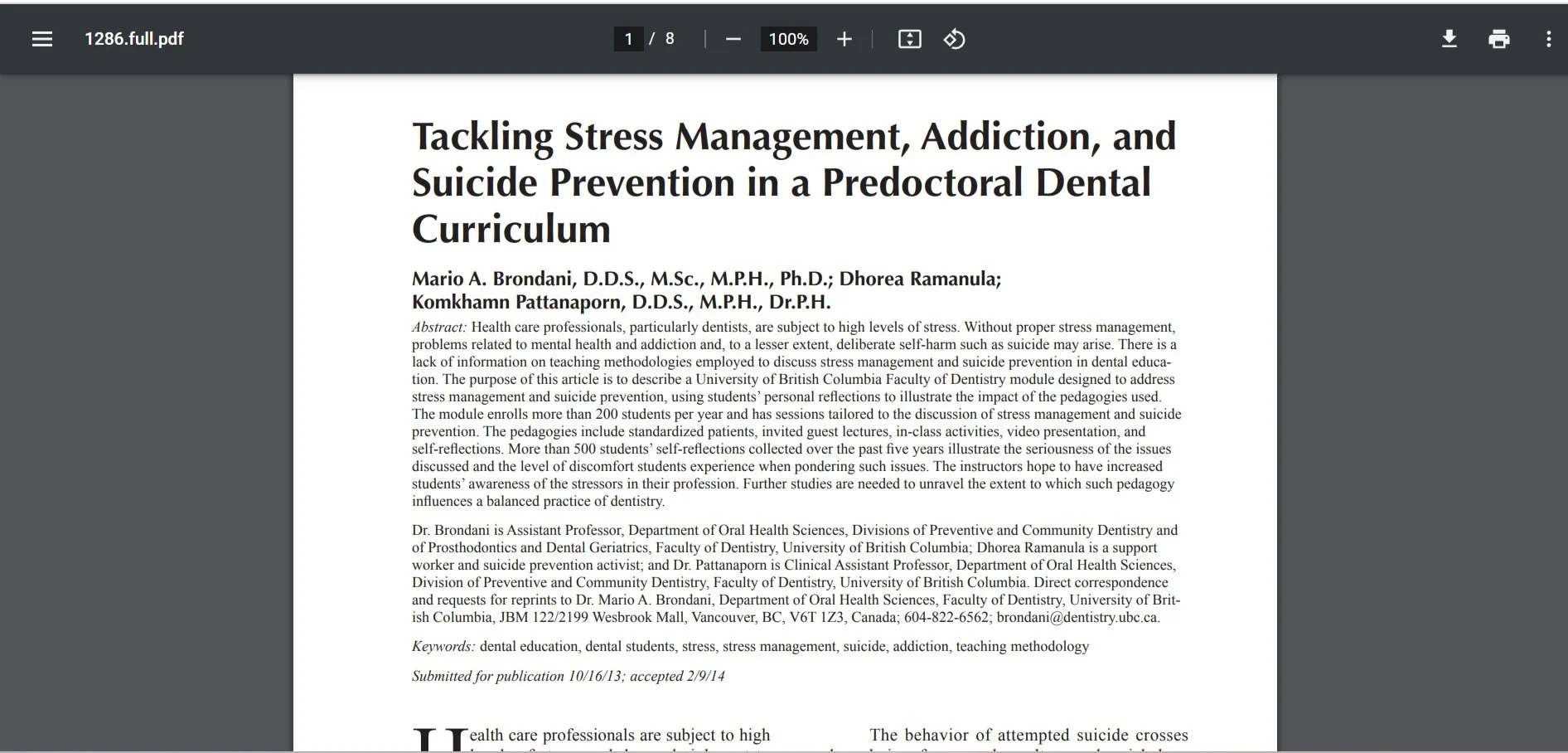
A University of British Columbia Faculty of Dentistry module designed to address stress management and suicide prevention. The pedagogies include standardized patients, invited guest lectures, in-class activities, video presentation, and self-reflections.
This document, developed by the Government of Alberta, includes information for employers about control strategies for commonly occurring psychological hazards, including ways to reduce the impact of increased workloads (e.g., allow workers to say “no” to overtime without repercussions) (p. 48).

In this video, Dr. Sheila Raja discusses the burnout in healthcare (including associated concepts such as compassion fatigue and vicarious traumatization) and strategies to avoid it.
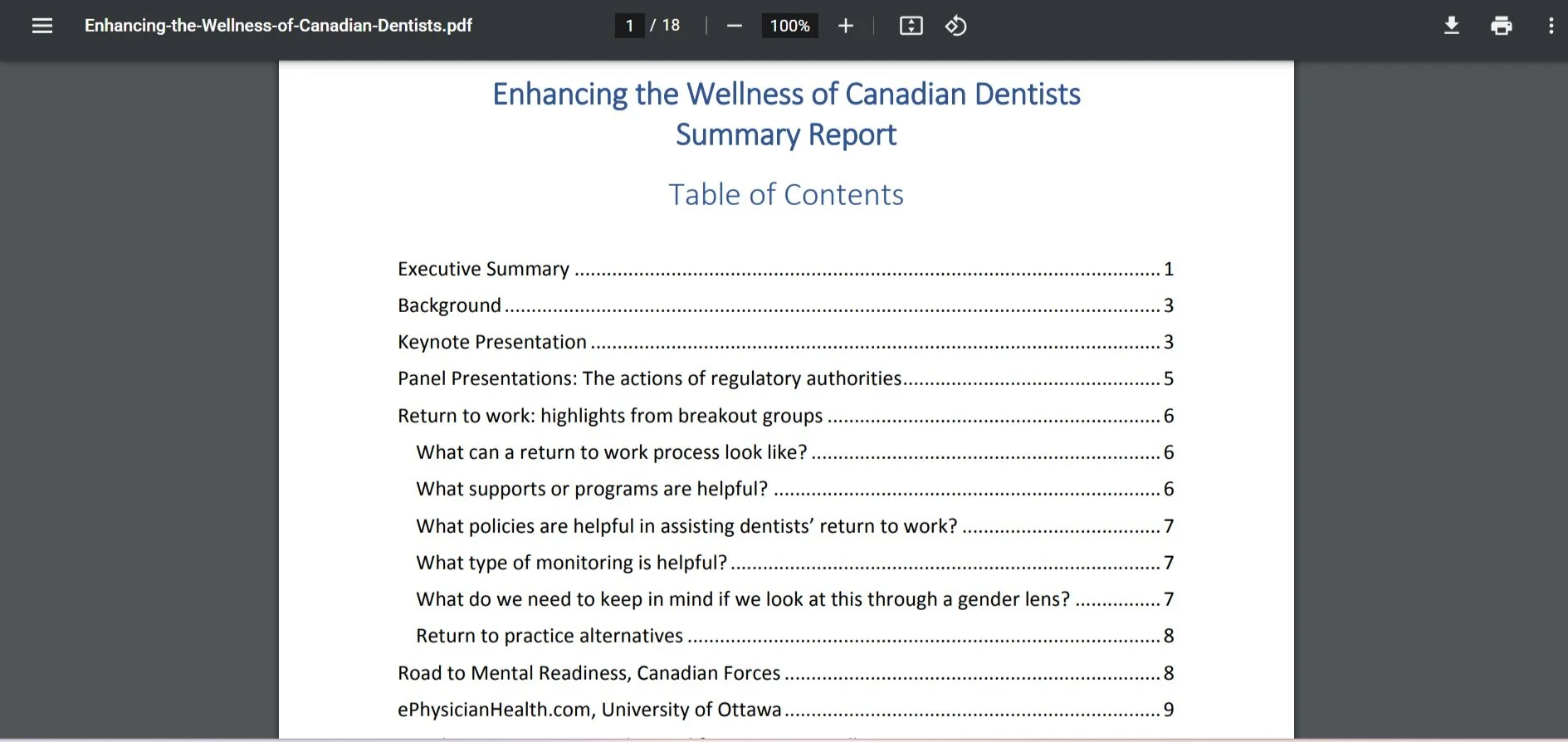
Dentists who must withdraw from practice to undergo treatment for mental health or addiction reasons face the challenge of keeping their practice viable in their absence and covering costs associated with treatment and income loss. B.C. dentists, for example, are supported in these challenges through the BCDA (locum placements).(p.1)
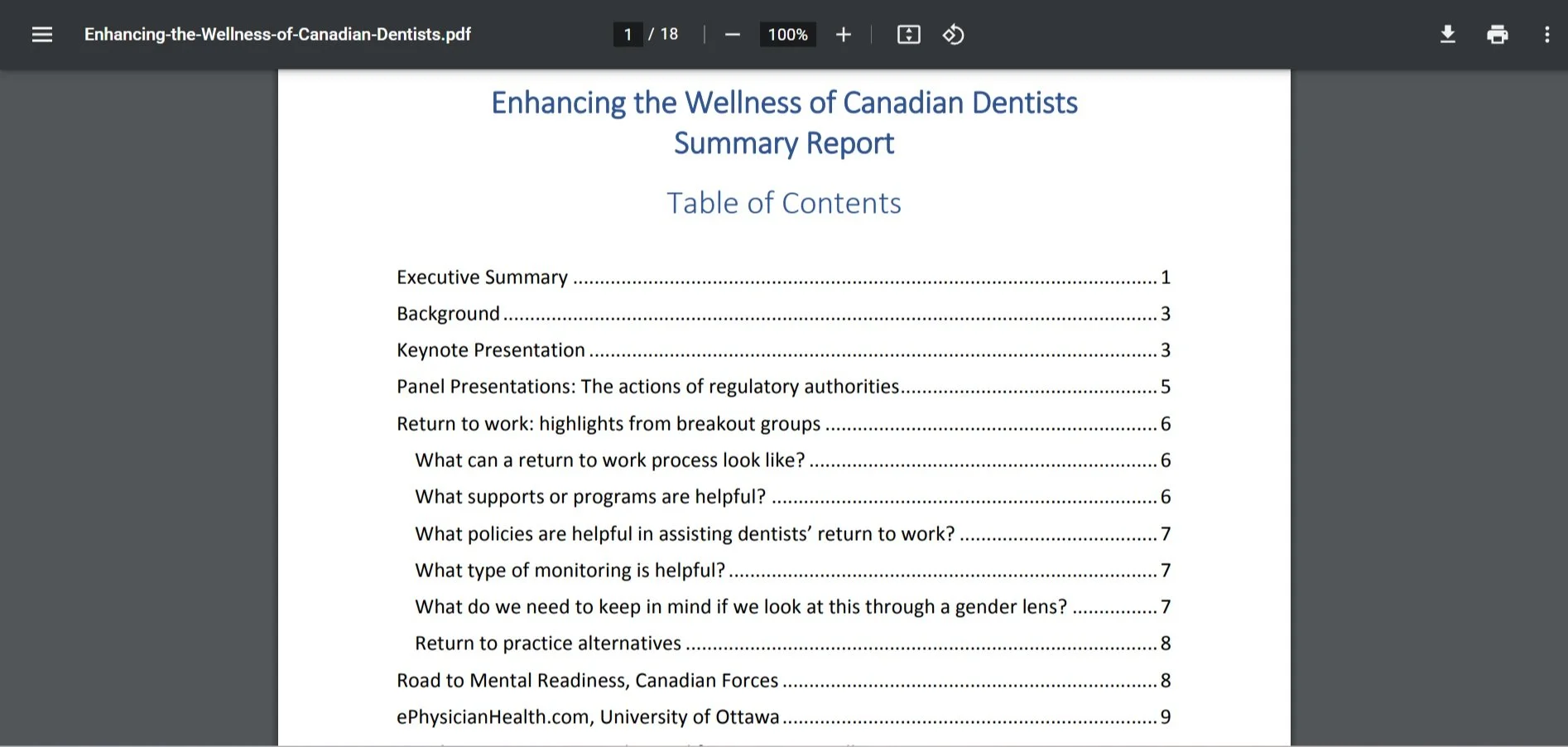
A policy is needed to address and protect the future insurability of the practitioner for short- or long-term disability once they have undergone rehabilitation for an addiction or mental health problem (p.7).
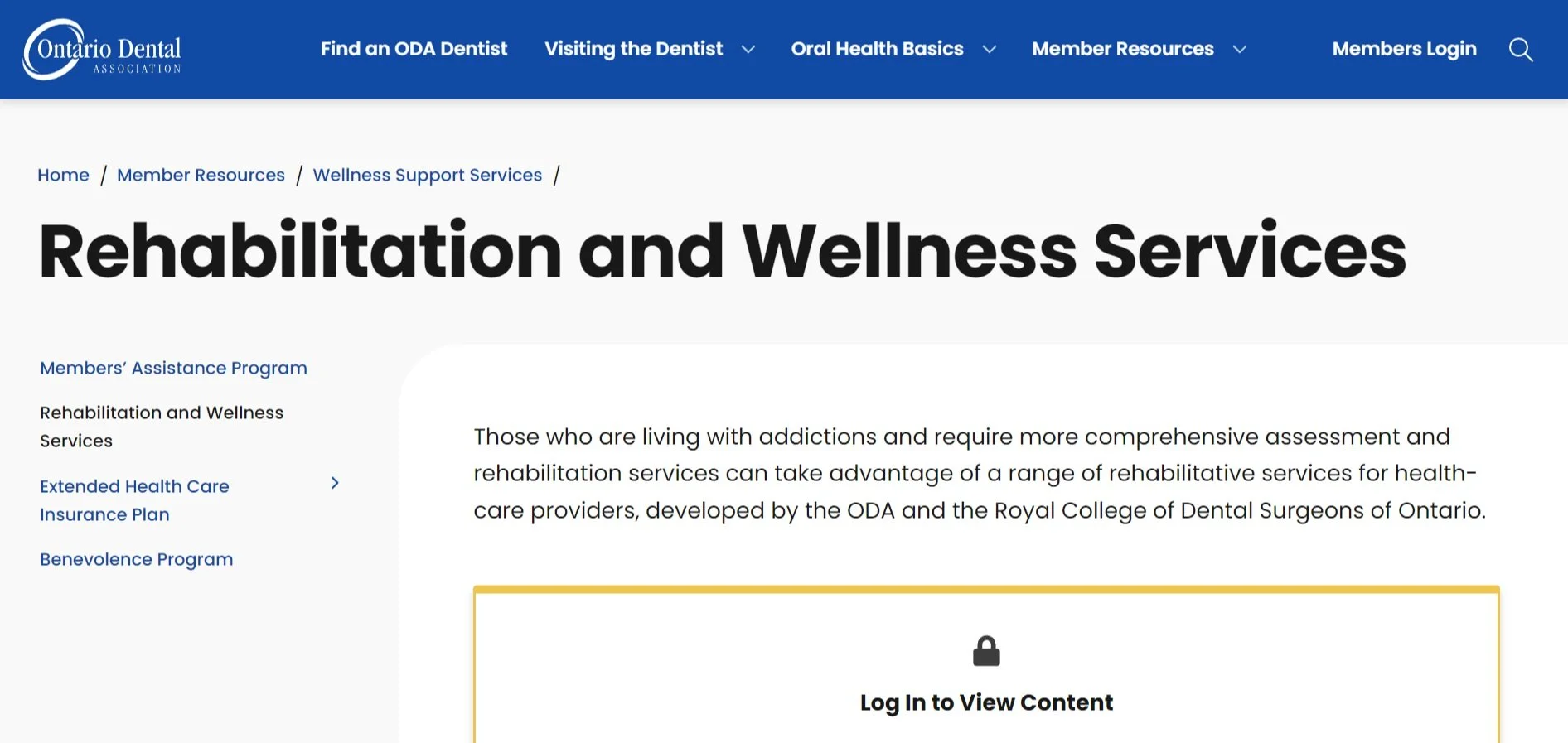
Dentists living with addictions can take advantage of a range of rehabilitative services for health-care providers, developed by the ODA and the Royal College of Dental Surgeons of Ontario.
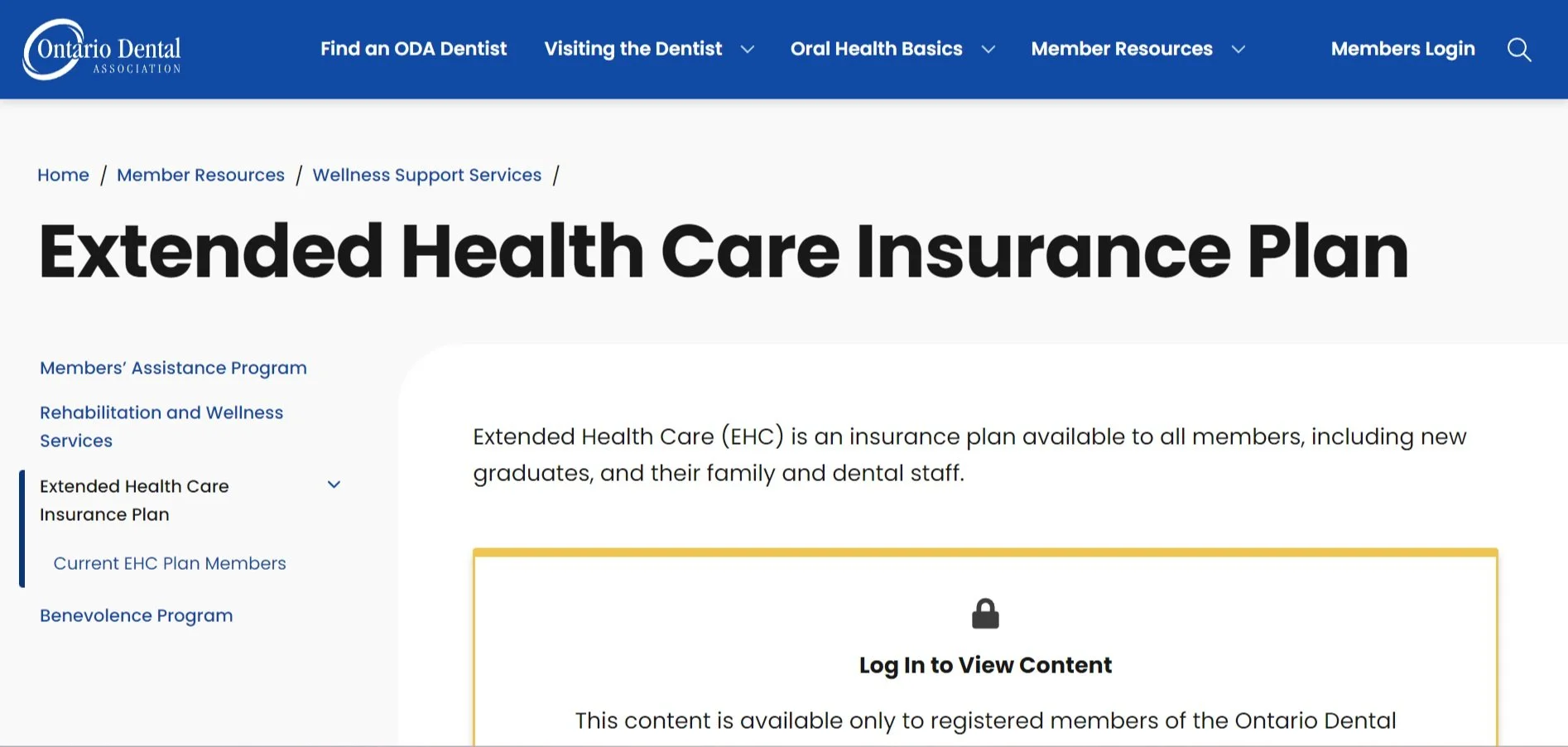
This plan is an insurance plan available to all ODA members, including new graduates, and their family and dental staff.
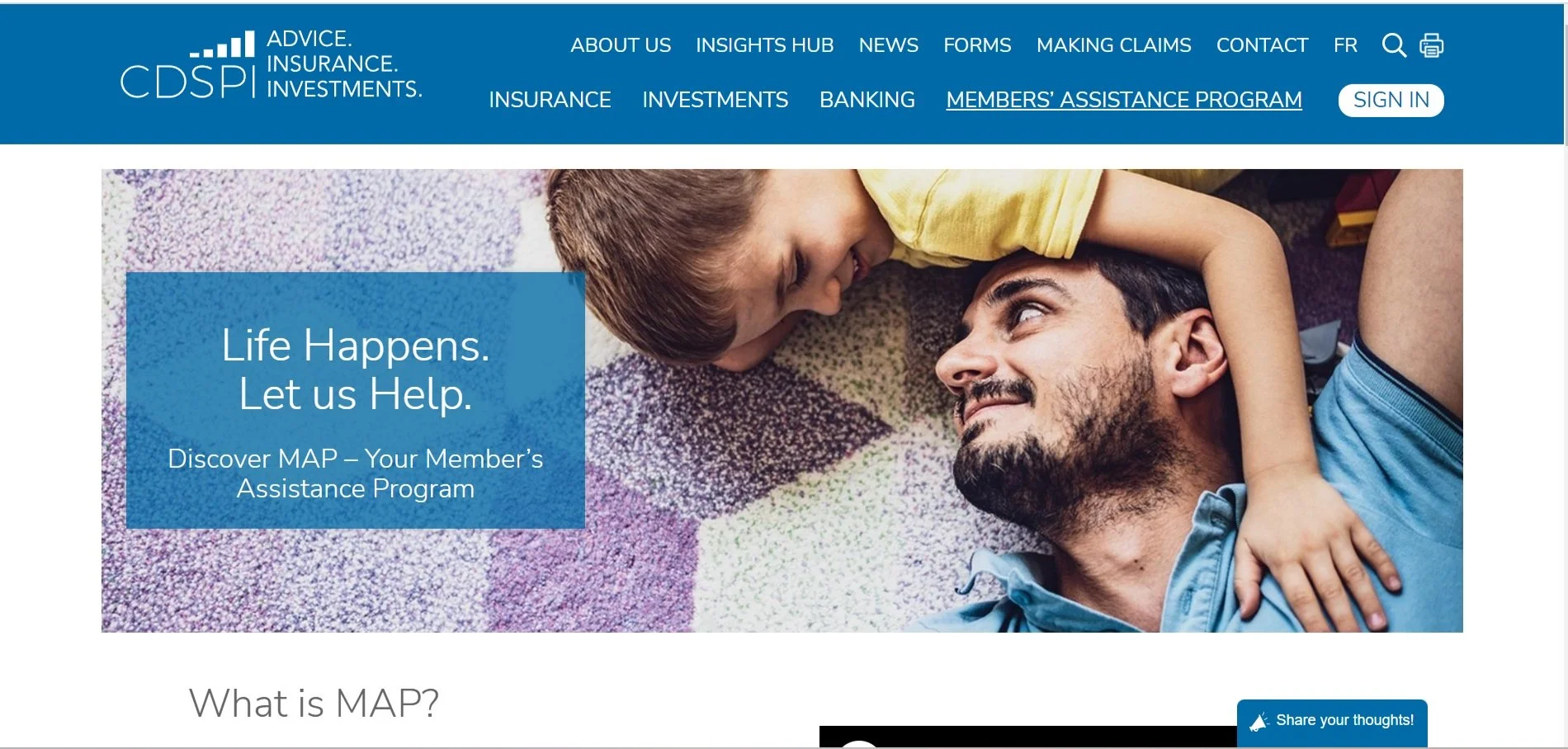
Sponsored by CDSPI and available to dentists, dental office staff, dental students and employees of the Canadian Dental Association and their immediate family members, MAP provides access to professional guidance, clinical counselling and wide variety of wellness resources to help at school, work and in personal life.

The TAP is a voluntary and confidential service offered and promoted by the College of Dental Surgeons of Saskatchewan. Counseling service is provided by PAR Consultants of Canada Limited, a professional group of counselors and consultants.
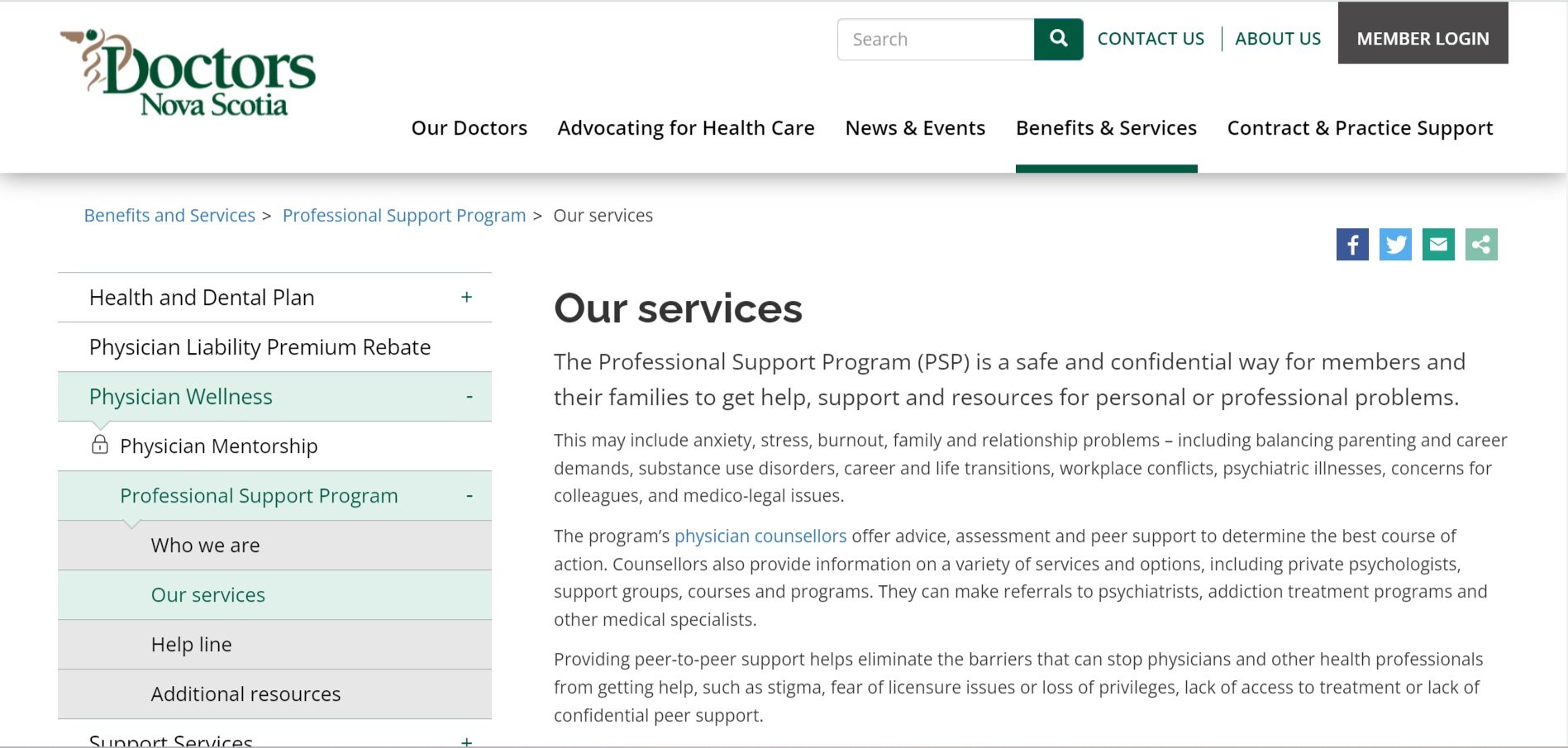
Doctors Nova Scotia’s Professional Support Program (PSP) provides confidential peer-to-peer support for members and their families who are dealing with personal or professional problems and also supports initiatives, workshops and other resources that promote wellness, resiliency and balanced living.
CE Courses and Virtual Sessions on Stress and Work-Life Balance at National Dental Conferences
At national conferences (e.g., Pacific Dental Conference) there are CE courses and virtual sessions on work life balance, stress in dentistry and other topics related to dentists’ mental health
CDA Discussions on Mental Health
Through various discissions, Canadian Dental Association raises awareness of mental health issues among dentists and how they should be more open about discussing them. (e.g, Is it Time To Reach Out? , an article on these issues published in CDA Essentials magazine).
PEI Dental Association Wellness Program
The association has an informal wellness program where they have partnered informally with a psychologist to provide help for the Association's members in case they needed help
“You kind of need those little cohorts of dentists to champion us [Members’ Assistance Program] among their own little communities because offices are very isolated .”
Interviewee
Organization (Leadership Devt. & Work Environment)

This brief intervention, focused on helping dental students at University of Chile to cope with symptoms of stress, anxiety, and depression has reduced their stress level and improved their coping skills.
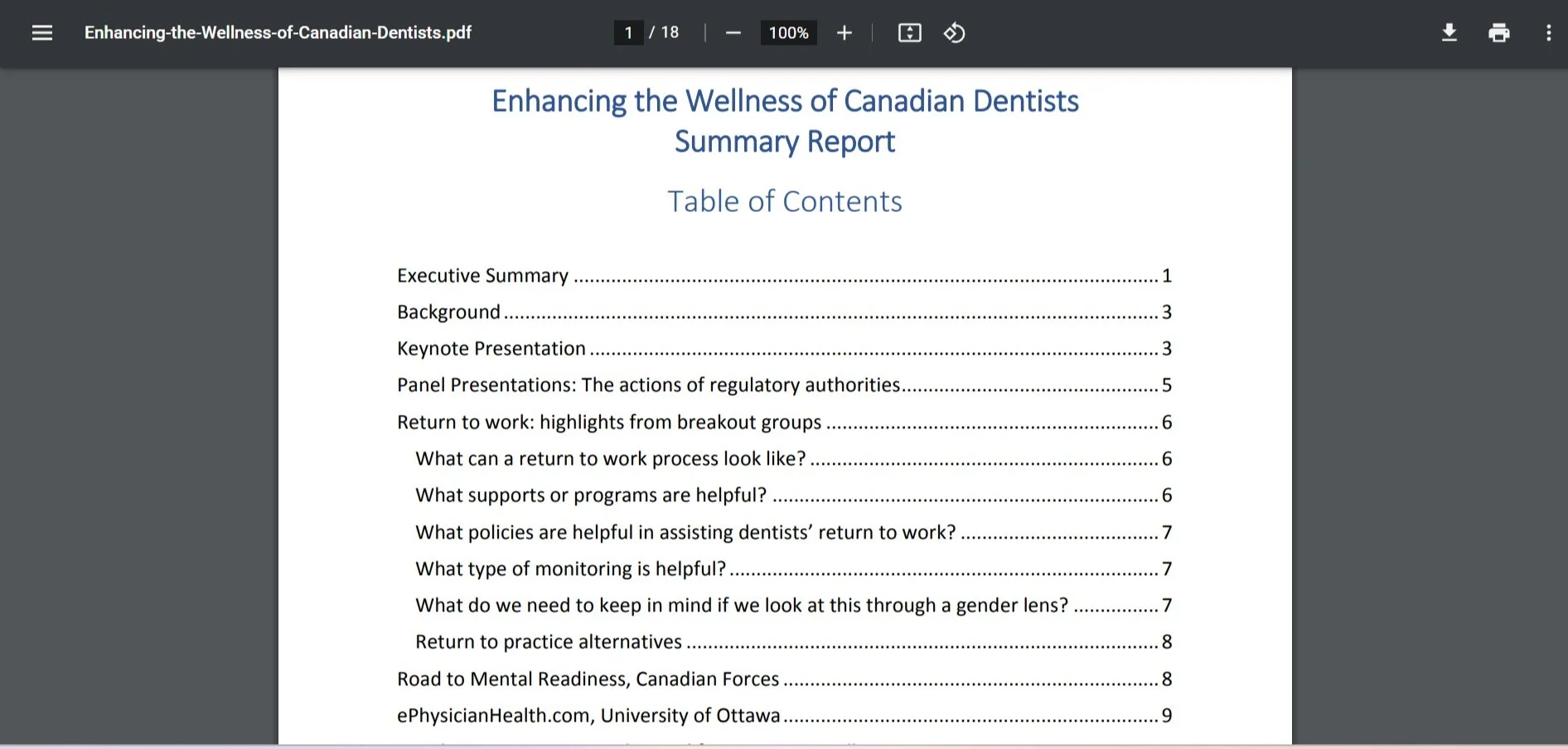
Keep in mind that leadership can tip an organization towards resilience. Incorporate discussions about wellness into team meetings, and delegate related activities to team members (Highlights from breakout groups, p.11).
Management policies and procedures that support work-life balance (e.g. voluntary reduced hours, voluntary part-time work, phased in retirement, telecommuting, job sharing, paid and unpaid leaves, dependent care initiatives, etc.).(p.43)
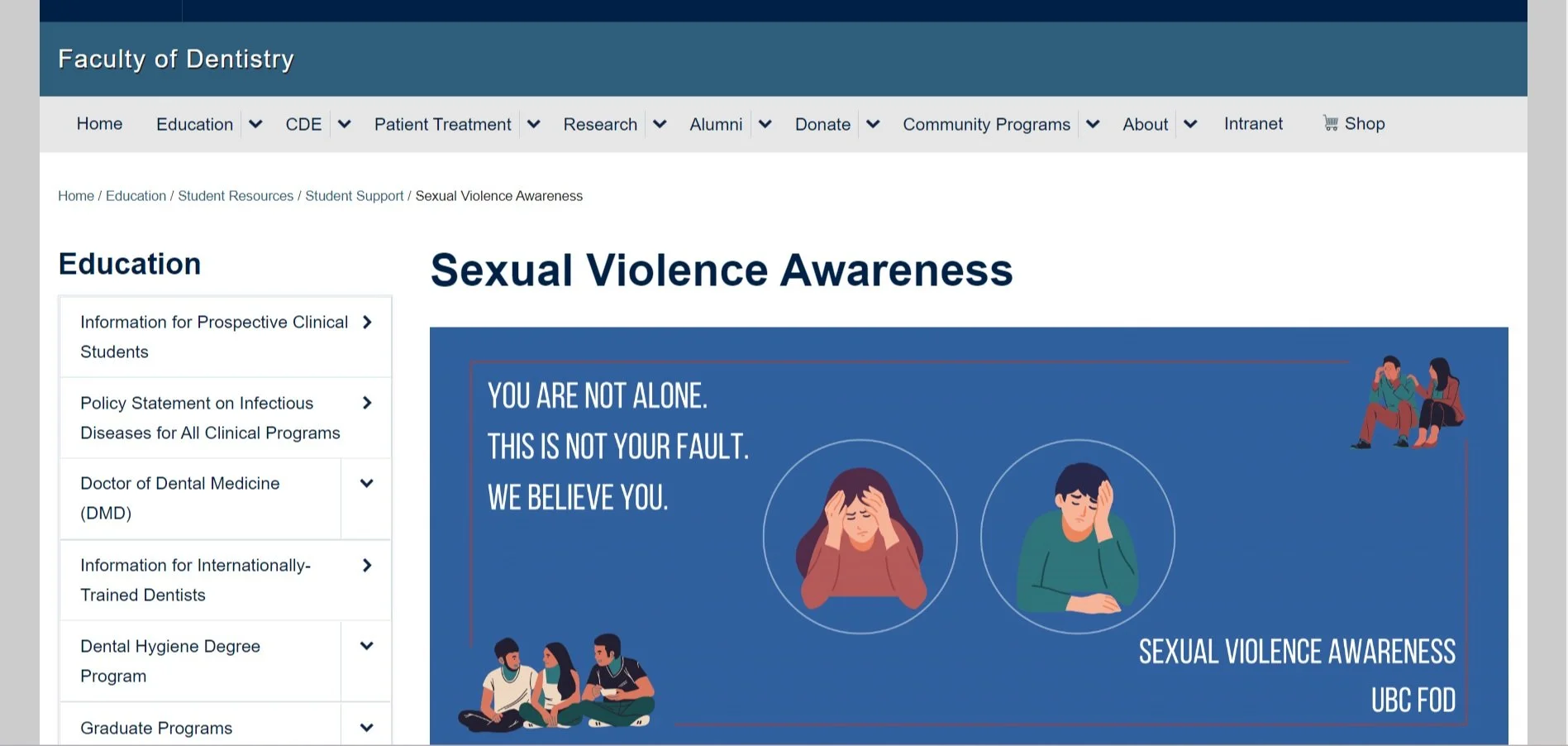
This web page provides information on sexual violence and different resources and supports available to students who have experienced it
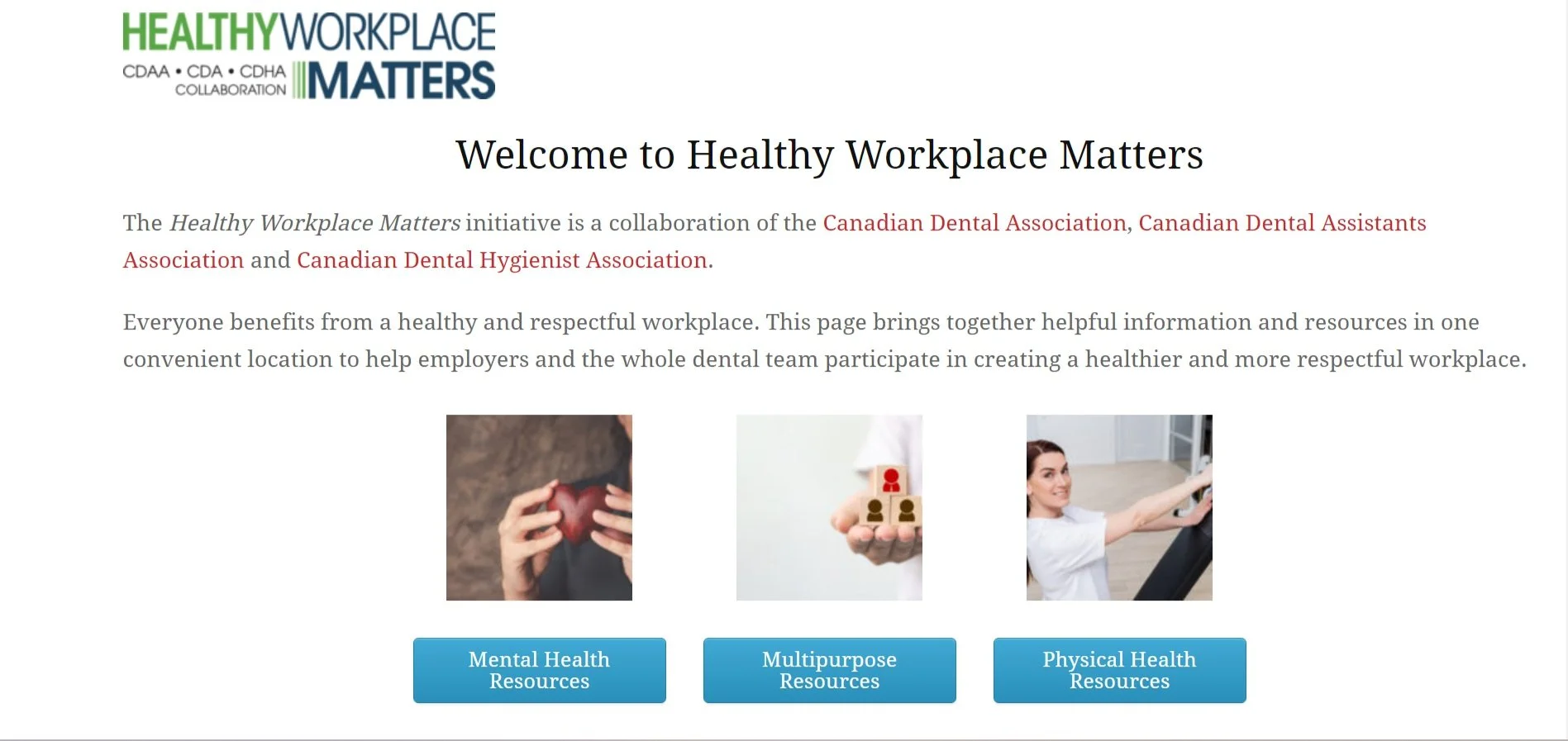
This page brings together helpful information and resources to help employers and the whole dental team participate in creating a healthier and more respectful workplace, including videos on bullying, harassment, workplace violence and strategies to create a healthy workplace.
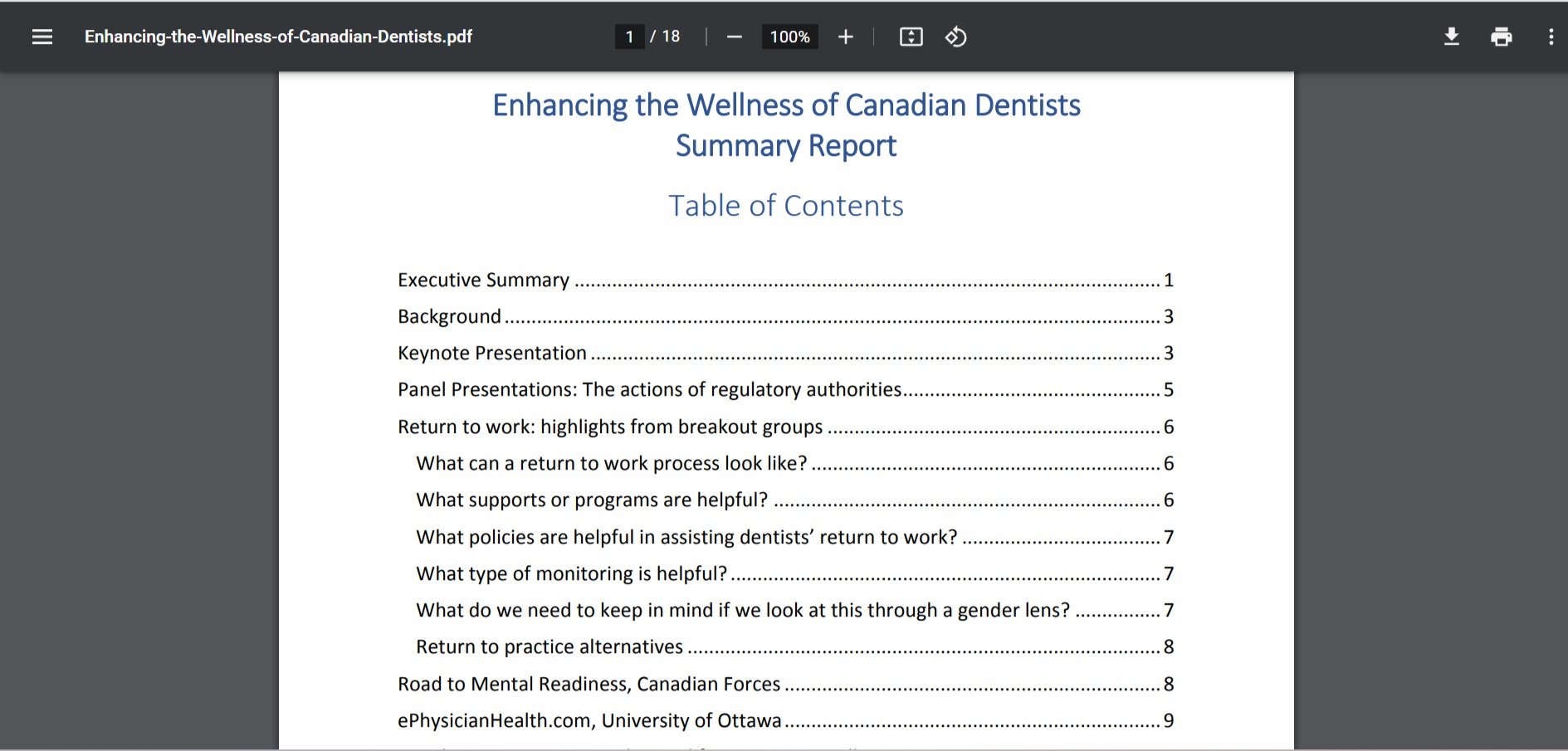
Dentists would benefit from programs that recognize the financial stressors associated with seeking care (e.g., costs for treatment and monitoring) and returning to work. Financial counselling services would be helpful, and perhaps long-term disability plans could have an overrider for addiction so that funds are coming in when the dentist is undergoing treatment and not at their practice. (p.6)
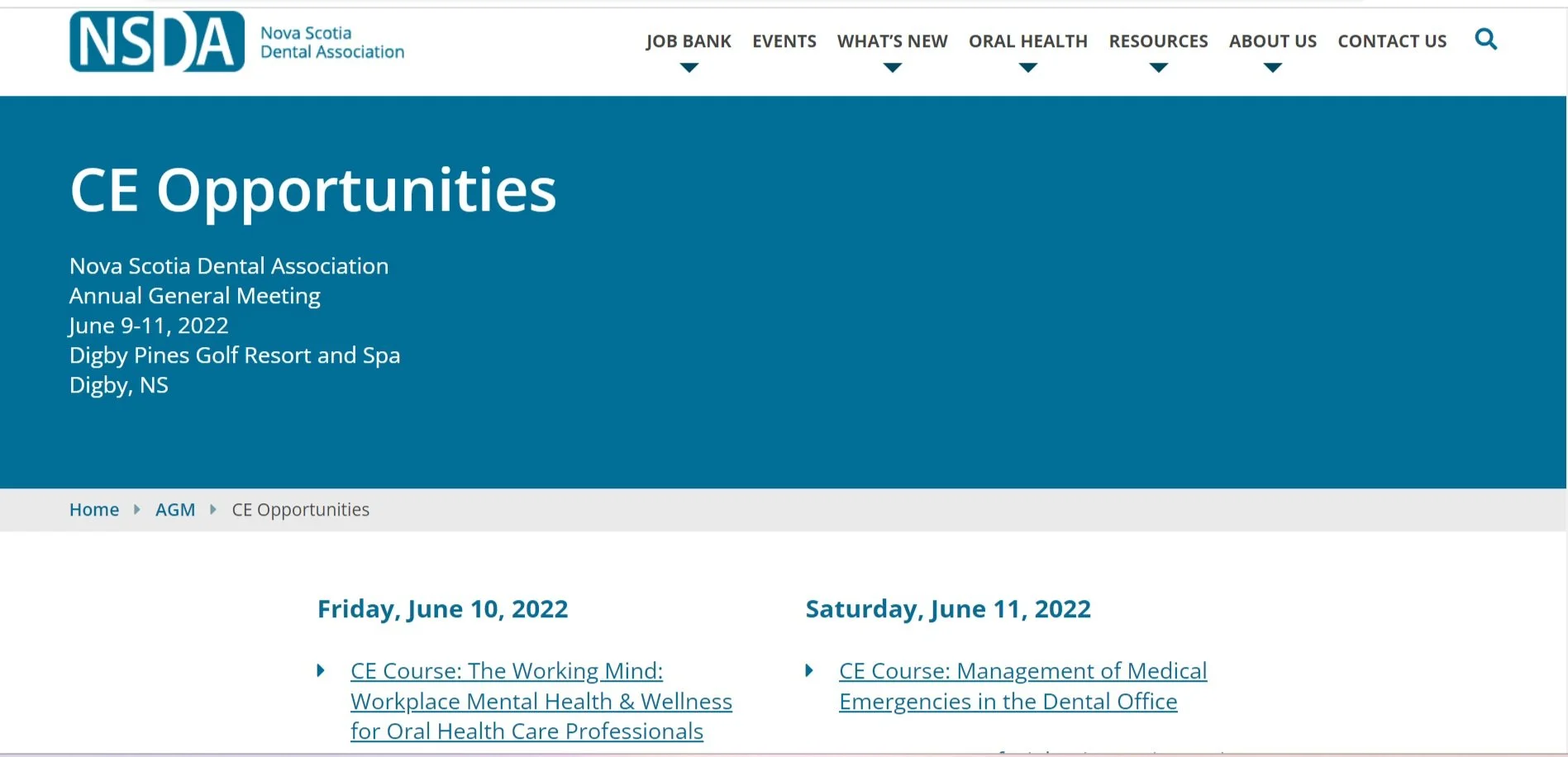
CDA has partnered with MHCC to create this course that is available to CDA members free of charge. It covers various topics related to MH, including how to communicate with employees about mental health illness in a workplace context and workplace accommodations and return to work and how to how to reduce associated stigma.

So it affected me then, more recently, the stress of my dysfunctional workplace. Like I told you bullying, sexism, other stuff that I'm not going to get into details about, it made me so depressed, that for the first time of my life, I was suicidal.
Interviewee
Lightening the Workload or Re-Arranging The Schedule To Allow More Time Off
A Session On Sexual Violence And Harassment Prevention For Students At University of Saskatchewan Faculty of Dentistry
Raising Awareness Of And De-Stigmatizing MH Issues As Well As Creating A Workplace Culture That Is Supportive Of Dentists’ Overall Health
U Of T Wellness Committee Initiatives
This committee aims to support mental health and wellbeing of dental students by having Lunch and Learns on mental health, help-seeking, and other topics. At U of T there is a lots of MH support for students (including counselling) that can help students navigate student years without spiraling.

“They [office managers] don't understand the profession, the challenges of the profession, they don't really care about the staff or healthcare professionals.”
Interviewee
Work Unit (Peer Support)
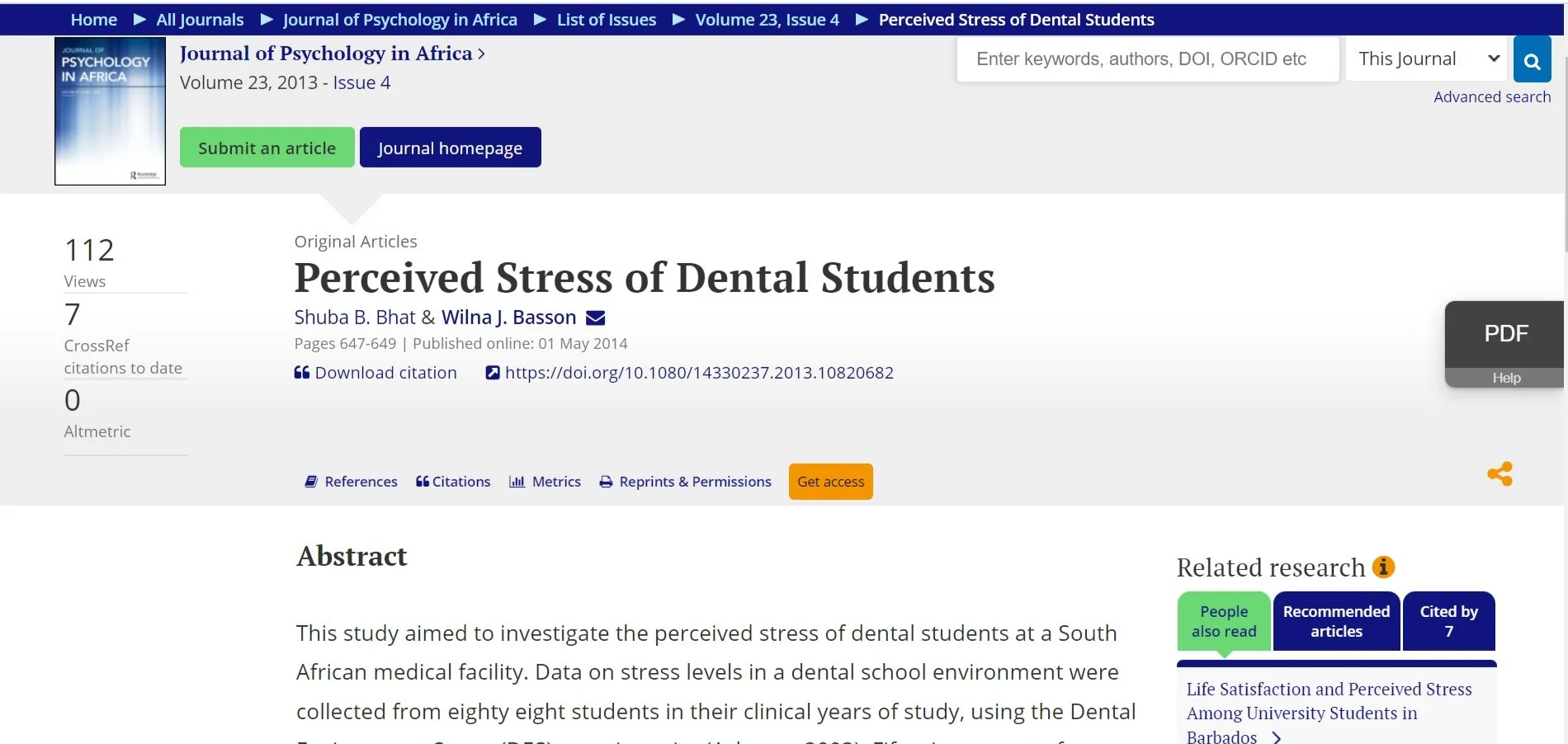
There is a need for the establishment of student mentors and counsellors combined with a faculty advising system, in addition to student-oriented programmes. Signs and symptoms of stress should be detected early to refer for proper intervention. (p.648)
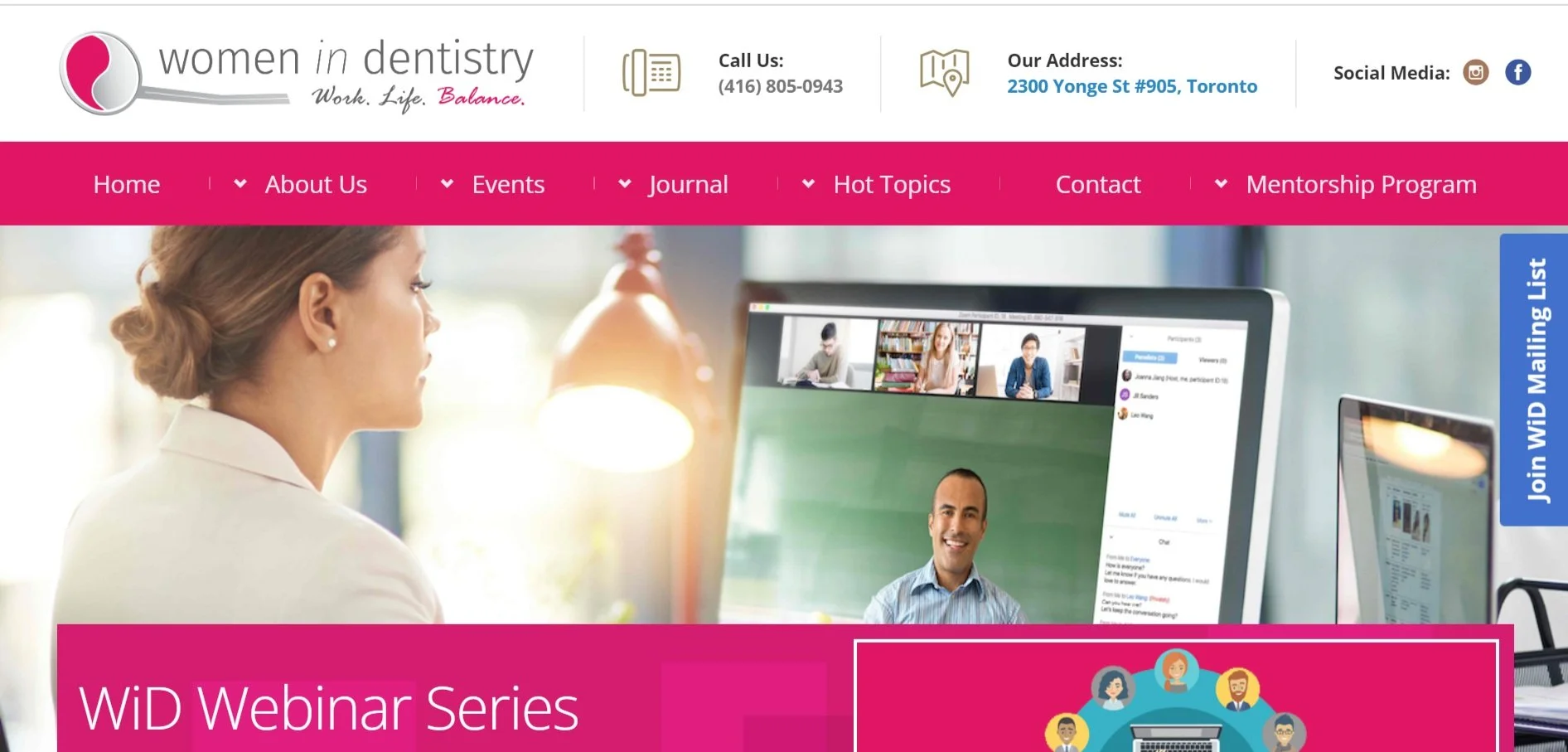
Group of female dentists gathered together to chat about an array of issues relevant to women in dental profession (clinical aspects, social and family life).
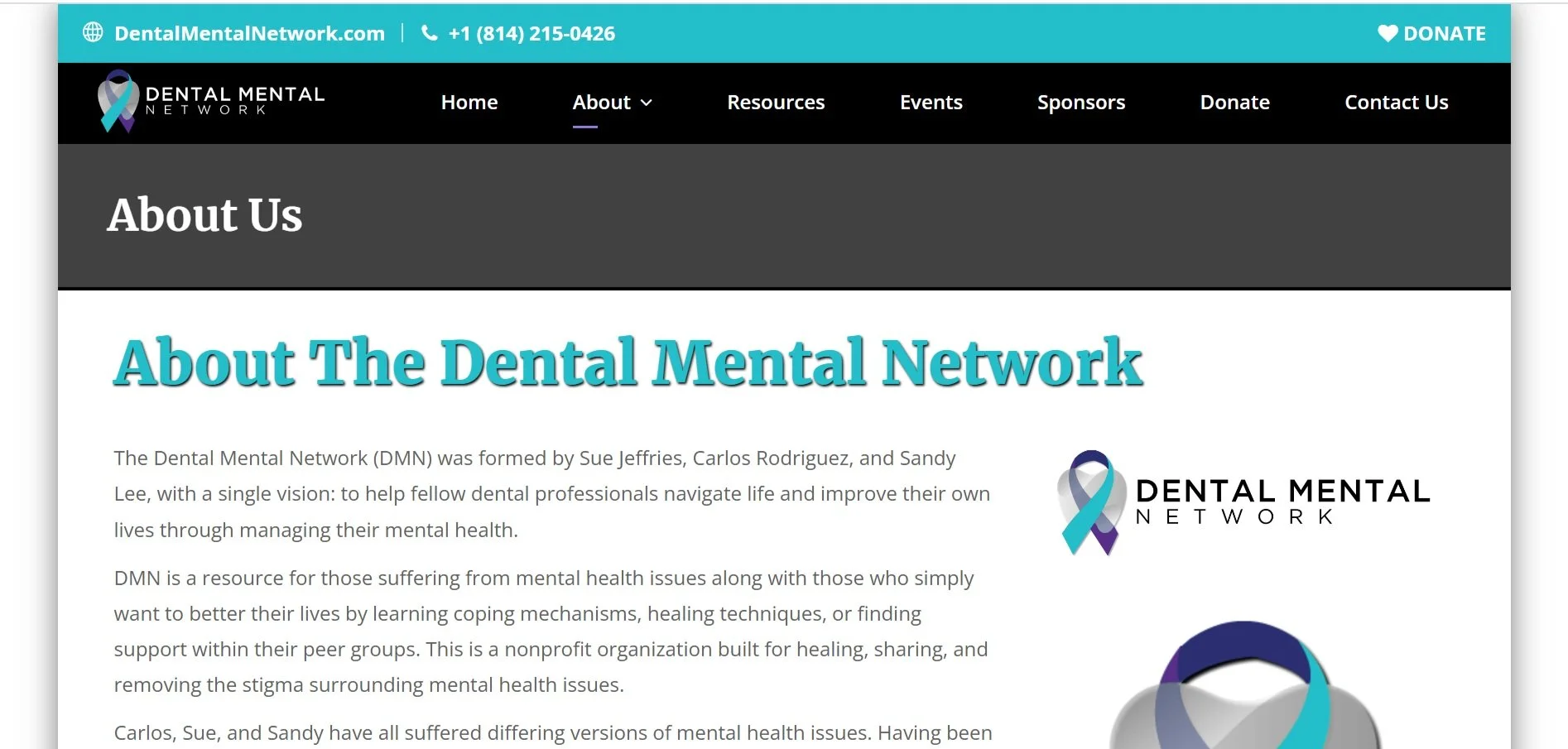
A non-profit organization, created by three dentists, aiming to help fellow dental professionals with mental health issues survive and thrive by helping to remove the stigma surrounding mental health issues, offering support and resources, and providing a platform for sharing their stories.
Dentists returning to work after treatment for mental health or addiction issues would ideally be supported by a network of mentors, through a process that uses benchmarks drawn from existing successful programs (p1). A life-long support system that could be provided through associations would ensure that a dentist returning to work would not feel alone and can always turn to a “kindred spirit” for help. (p.7)
A confidential program that involves 11 dentists who act as first line responders refers dentists and their family members to registered psychologists
Informal Whatsapp and Facebook Groups
Dentists gather in online groups where they discuss stressors, MH resources and other issues.
Peer Support Initiatives
Network of dentists and other health professionals (nurses, physicians) where they can share their experiences and concerns (e.g., abusive treatment by patients) can be beneficial for mental health of dental professionals.

“We all have a WhatsApp group. And we check in daily so if one of us has a bad day, we vent. We feel better after.”
Interviewee
Individual
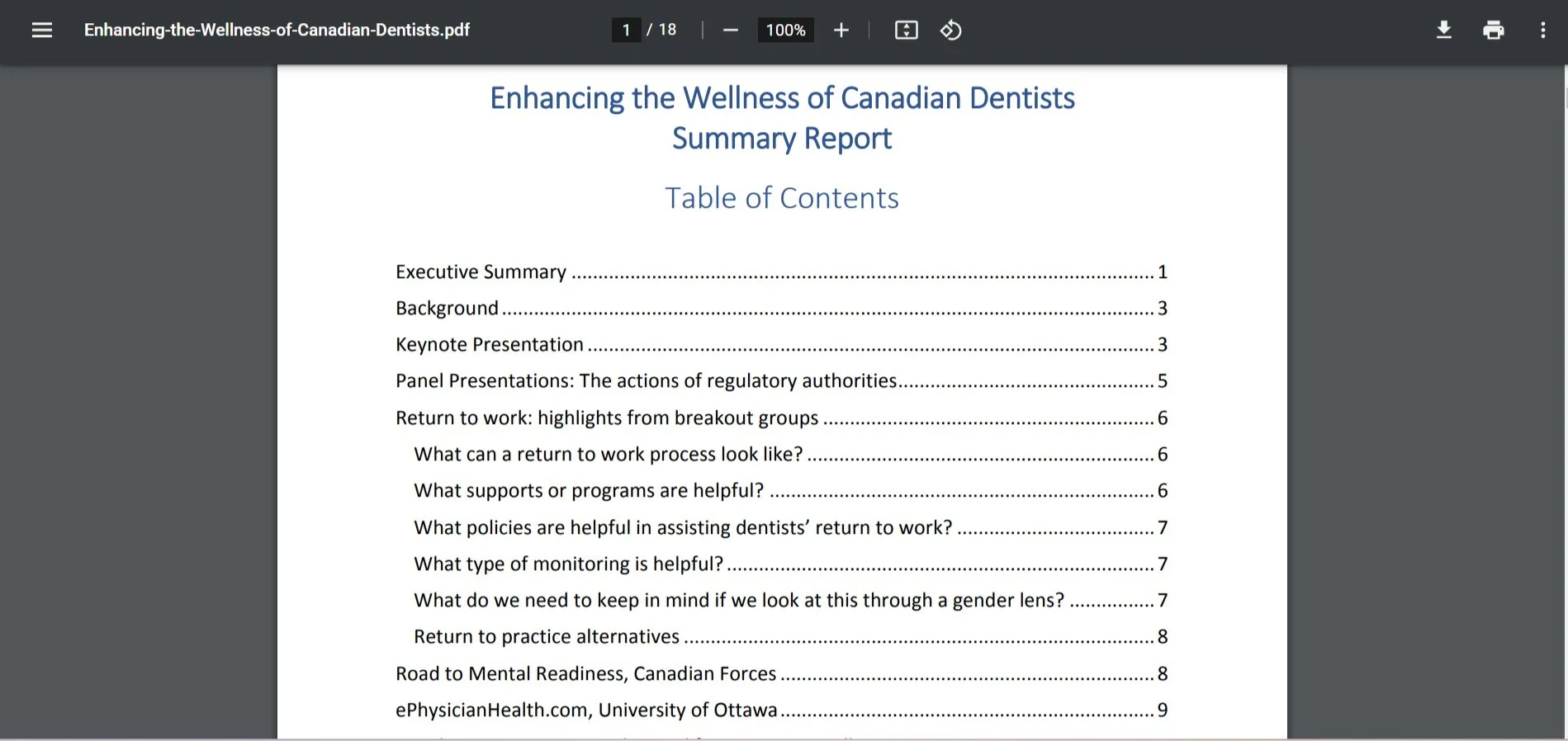
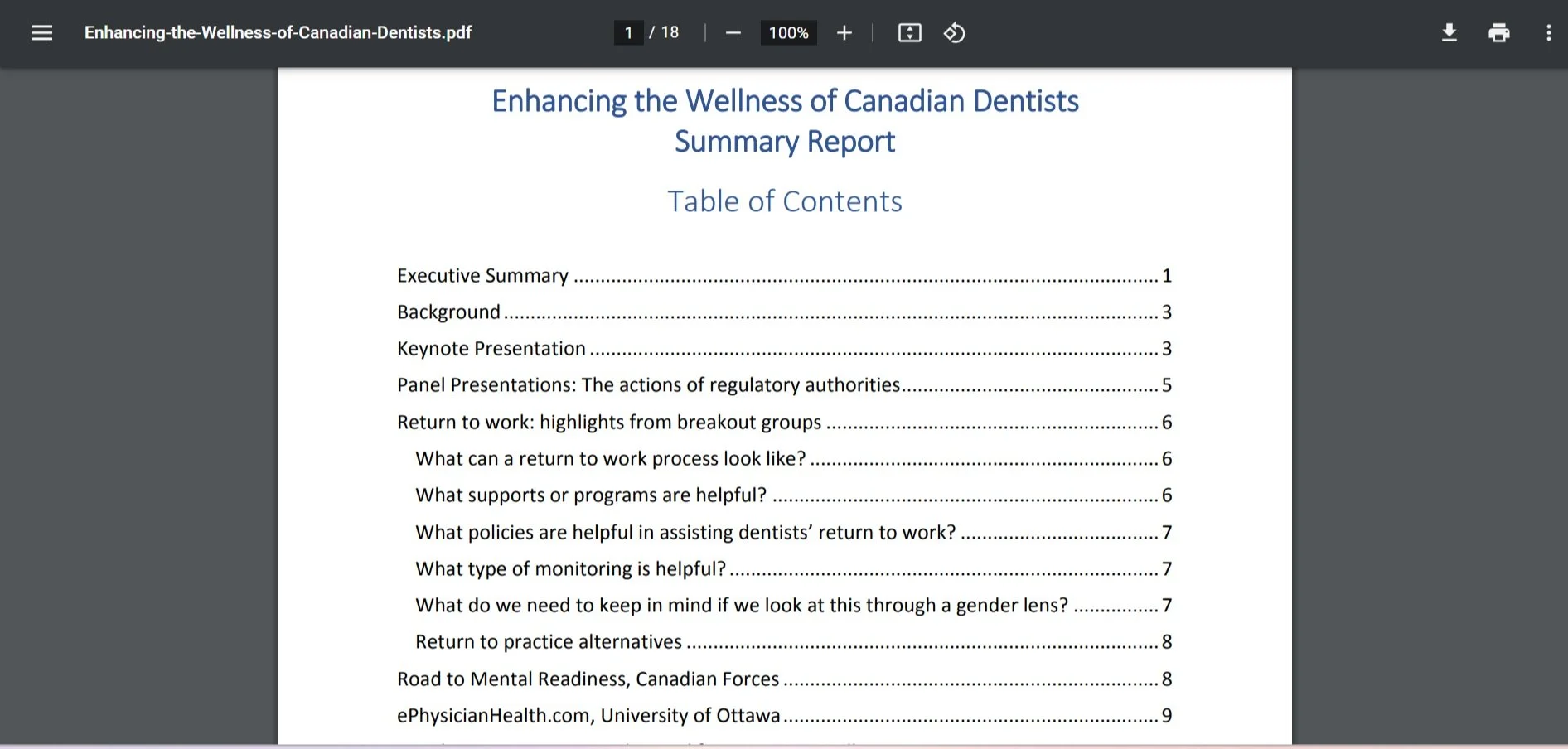
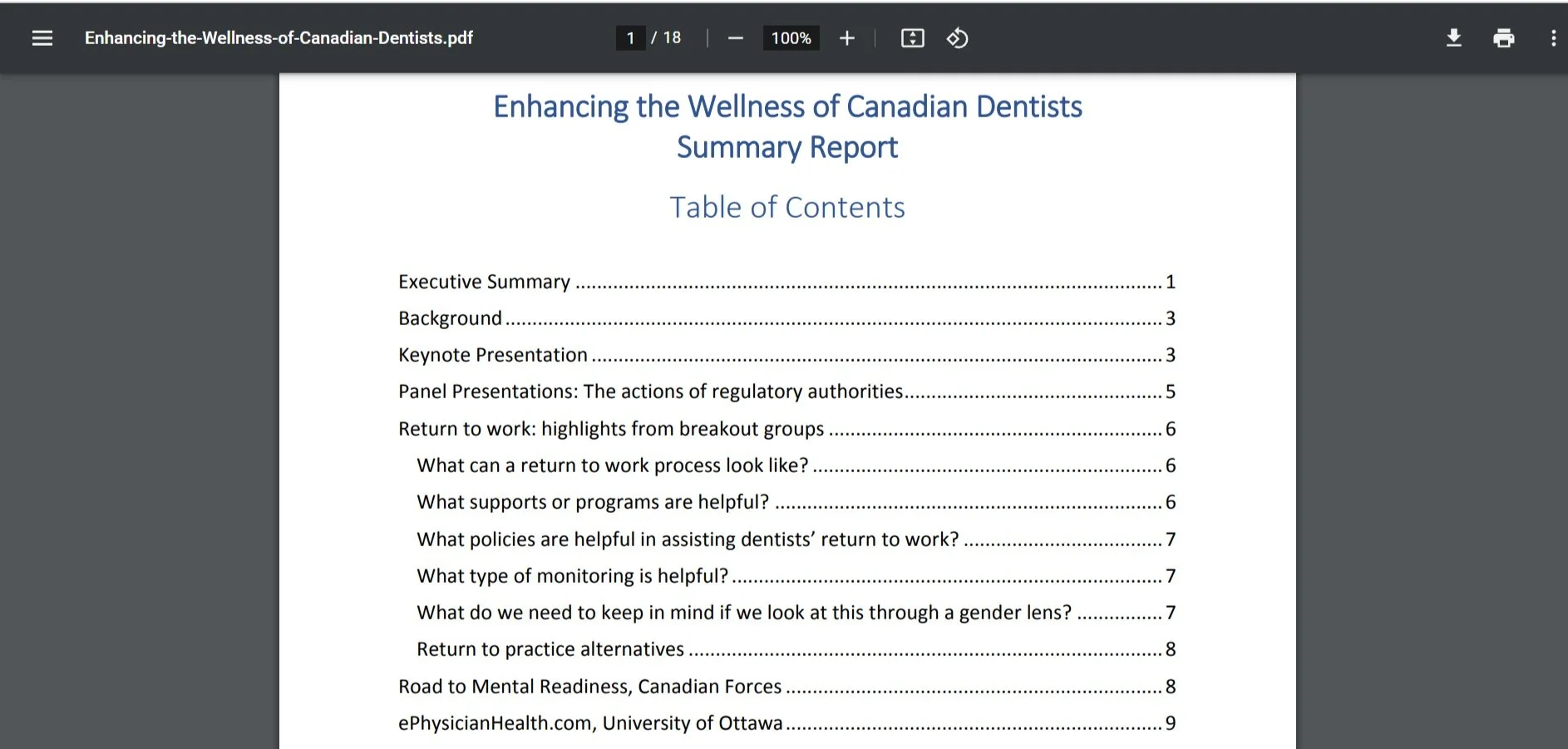
In the “Enhancing the Wellness of Canadian Dentists" report, it was suggested that a program similar to the Canadian Armed Forces mental health program would help improve dentists' resilience. “Road to Mental Readiness Program” helps Canadian Forces (CAF) members and their families recognize mental illness earlier and seek help.
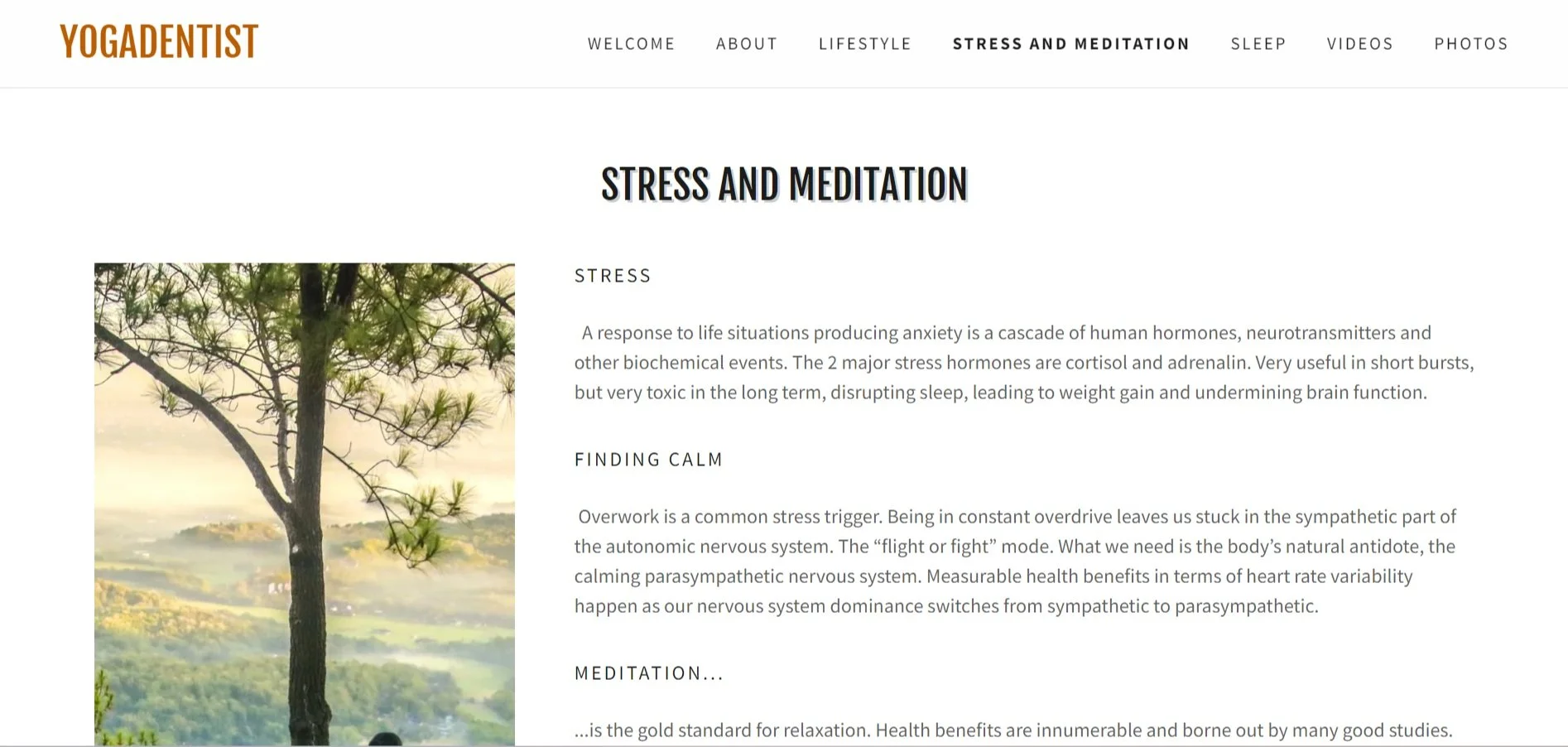
yogadentist.ca offers some tips on meditation and resources for those who plan to meditate in a high-tech way.
A resource available to dentists who want to have an edge in their life and their practice. Whether you want to learn to say “no” to your limited time schedule, clean out the clutter out in your life, reconnect with what’s most important to you, find meaning in your work, or more balance in your life, a personal coach can help you do it.
General
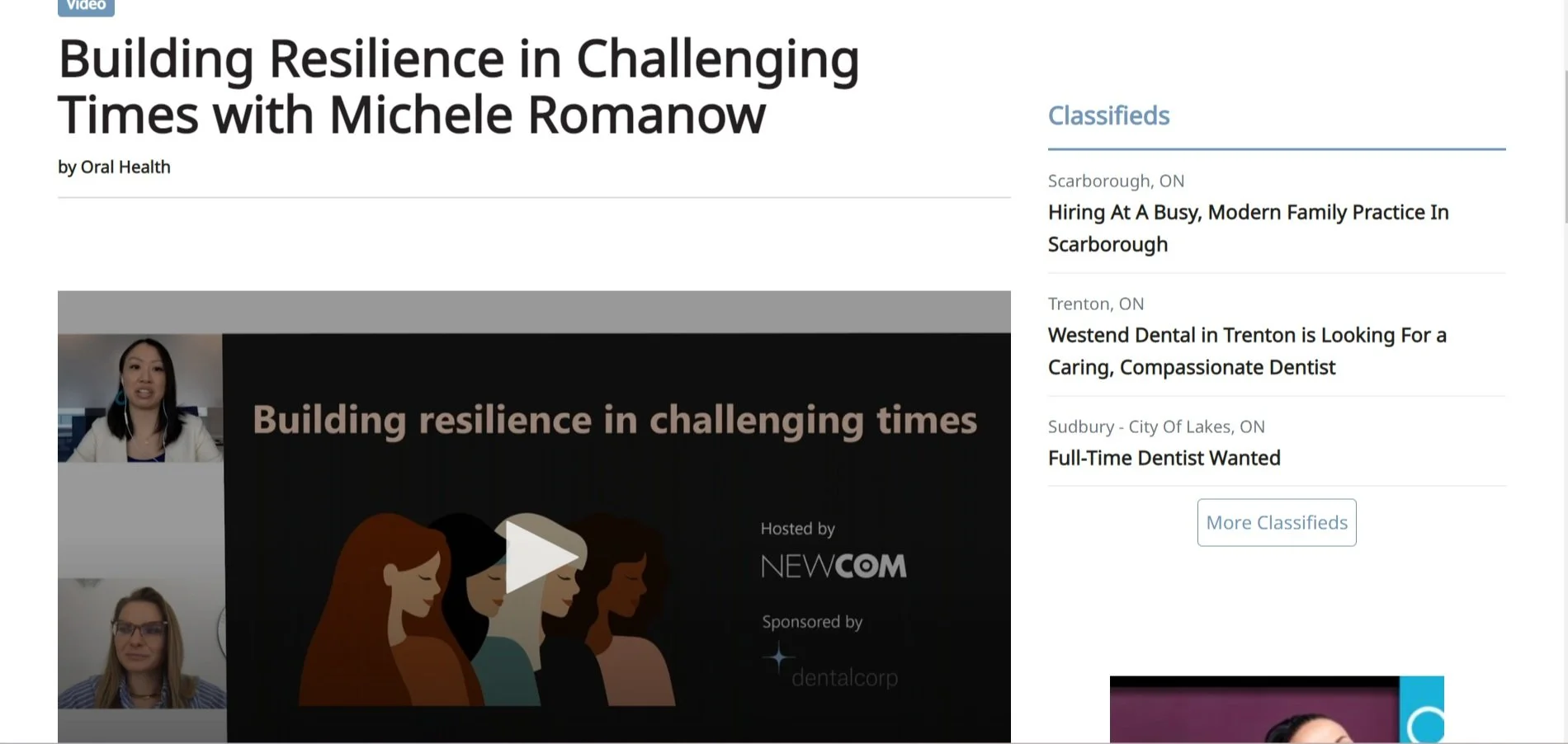
This webinar, that was hosted by Newcom Media in celebration of International Women’s Day, features renowned Canadian entrepreneur, Michele Romanow, on how to build resilience and overcome obstacles to achieve success in your life and career.
This 8 week long program teaches self-care practices that help buffer daily stress and build resilience.
This respurce is a national anti-stigma campaign designed to eliminate the stigma associated with mental Illness.